
Rebuilding the Caribbean Family: Young Migrants from the Diaspora, Africa and South Asia
Our islands are getting older and emptier. Instead of fearing immigration, the Caribbean could invite home its own scattered family: the diaspora's children, our kin across the Atlantic, and the lands of India that sent us our indentured ancestors.
Pensions in the Eastern Caribbean depend, in the end, on the contributions of people who are still working. That bargain is breaking down. Birth rates have fallen below replacement level, and for decades our brightest young people have left for London, New York and Toronto. The IMF warned years ago that emigration was speeding up the day pension reserves run dry. In a 2024 review it found the region's social security schemes still under strain, squeezed by low contributions, an ageing population and a large informal workforce.
Governments are responding the hard way. Grenada is raising its pension age from 60 to 65 and its contribution rate to 16%. St Vincent and the Grenadines is lifting contributions from 10% to 15%. Those reforms are necessary, but they only share out the pain. They do not add a single new worker.
That needs people. The question is which people, and on what terms.
Barbados shows the way
Barbados has already said out loud what others whisper. Its 2023 Population Policy, approved in 2024, recommends growing the working-age population mainly through managed migration over the next 30 years. The draft set an ambitious target of 185,000 more people by 2050.
Prime Minister Mia Mottley has been careful about how she frames it. The policy, she said, starts by looking for the descendants of Bajans abroad, and asks whether citizenship should become a right for grandchildren and great-grandchildren. Beyond that, migration would be matched to the skills the island needs, rather than opening the floodgates. She pointed to Canada, which has brought in two to three per cent of its population over a number of years, as the best example.
Barbados is now drafting a National Migration Policy guided by CARICOM and the UN's Global Compact on migration. Its foreign minister has described well-managed migration as an engine for creativity, innovation and growth rather than a burden. The smaller islands of the OECS face the same arithmetic, with fewer people and less time.
Calling the diaspora's children home
The first and easiest source of young people is our own family abroad. Millions of people of Caribbean descent live in Britain, the United States and Canada. Many second- and third-generation members already hold, or could claim, citizenship of the islands their parents and grandparents left. They often speak the language, know the culture and have skills in health, education, technology and finance that the region badly needs.
Yet too often we make it hard for them. Qualifications go unrecognised, residency rules are confusing, and pension rights built up abroad do not travel home. Grenada's 2026 Diaspora Homecoming and similar campaigns are a good start, but a party is not a policy. A serious offer would include:
- Citizenship by descent extended to grandchildren and great-grandchildren, as Barbados is considering.
- Fast recognition of professional qualifications from Britain, the US and Canada.
- Social security agreements so contributions made abroad count towards a Caribbean pension, and the reverse.
- Short-term working visits for young diaspora professionals, including medical, teaching and technology placements, that can grow into permanent moves.
The same logic applies to the thousands of international students trained every year at the region's medical schools, such as St George's University in Grenada. Almost all of them leave. A clear route to stay and practise for a few years after graduating would keep some of that talent.
The Atlantic bridge: Africa
The second source is bolder, and it is already taking shape. West Africa has one of the youngest, fastest-growing populations on earth, much of it English-speaking and well educated. It is also bound to the Caribbean by history and blood.
The political groundwork is being laid. At the second CARICOM–Africa Summit in Addis Ababa in September 2025, leaders backed visa-free travel and a direct air link between the two regions. Ghana has signed visa-free travel deals with Antigua and Barbuda, Dominica and St Kitts and Nevis, and its agreement with St Kitts also covers labour cooperation. Nigeria granted visa-free entry to citizens of St Kitts and Nevis in 2025. In June 2026, Grenada approved visa-free access for Nigerian passport holders, with plans for direct flights.
The traffic already runs both ways. Ghana's Right of Abode law, passed in 2001, lets people of African descent from the Americas live in Ghana indefinitely, and diaspora members, including Caribbean people, have settled there under it. The Caribbean could offer a mirror image: a structured route for young Africans to come, work and eventually belong.
Barbados's Prime Minister has argued that visa-free travel is the precondition for linking CARICOM's single market with the African Continental Free Trade Area. Grenada's Prime Minister Dickon Mitchell has called his country's approach a deliberate policy of lifting visas between Grenada and Africa. The logic is simple: if we want Africa's trade and investment, we will also need to welcome Africa's people.
The other ancestral link: India and South Asia
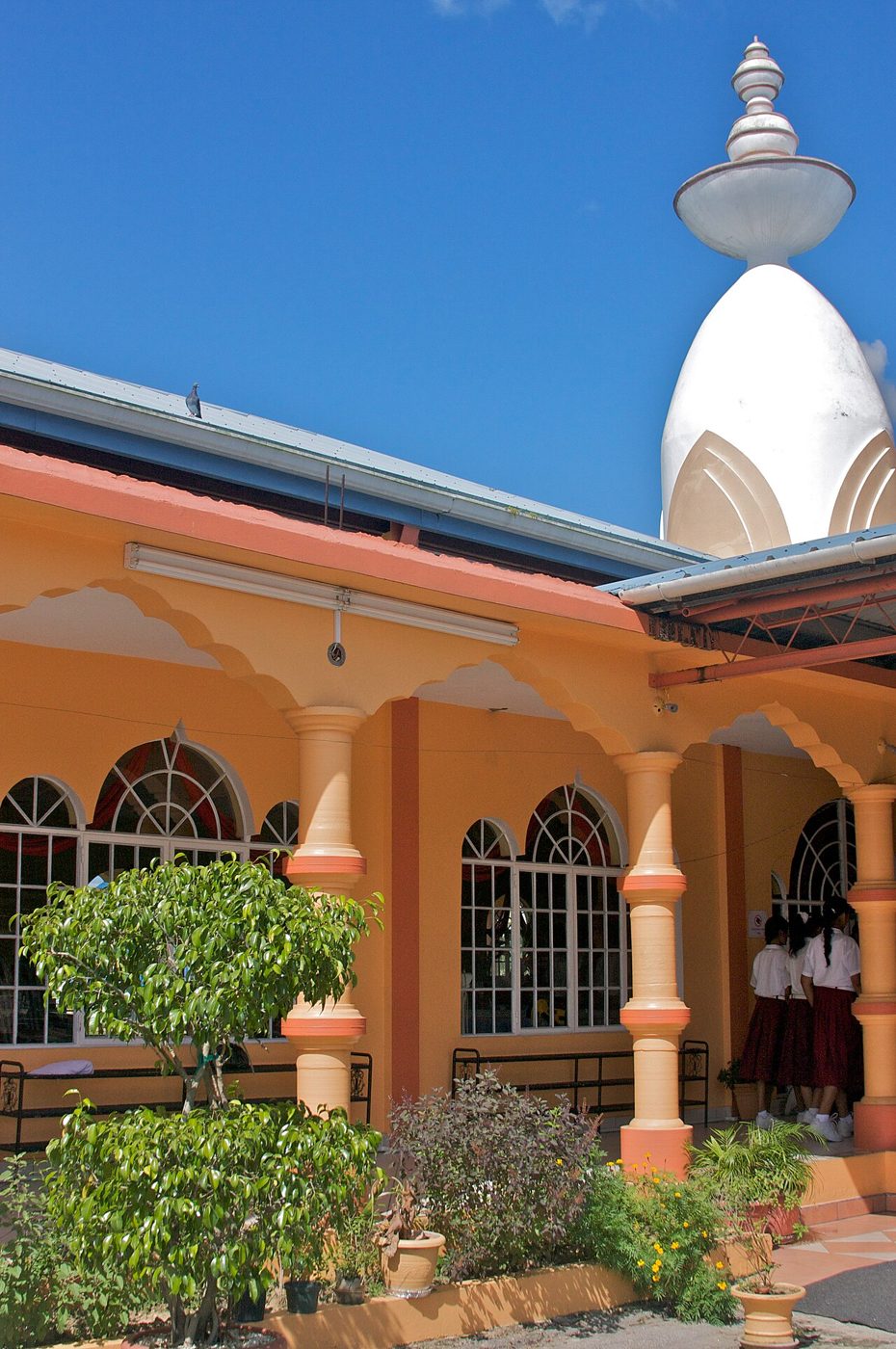
The Caribbean family has an Indian branch too. Between 1838 and 1917, hundreds of thousands of indentured labourers were brought from India to replace enslaved Africans on the plantations. Most went to Guyana and Trinidad, where their descendants are now among the largest communities, but others came to Jamaica, Grenada, St Lucia and St Vincent. Indian food, faith, music and festivals are woven into Caribbean life.
That history gives the region a second natural partner. India is now the world's most populous country, with a large, young, English-speaking workforce and one of the biggest pools of trained nurses and IT professionals anywhere. Bangladesh, Nepal and Sri Lanka also export skilled workers worldwide, and the Philippines, though in Southeast Asia, is a major supplier of nurses and care workers.
The relationship is warming. At the second CARICOM–India Summit in Georgetown in November 2024, Prime Minister Narendra Modi made the first visit to Guyana by an Indian leader in more than 50 years. He proposed seven pillars of cooperation, including more technical scholarships and training for Caribbean people. India's Foreign Minister visited Jamaica in May 2026, pledging support for its recovery from Hurricane Melissa.
South Asian workers are already arriving. Jamaica's University Hospital of the West Indies has long employed Indian nurses. Guyana approved the recruitment of 500 nurses from Bangladesh in 2024 and has advertised in Indian newspapers for nurses for its new hospitals.
Guyana's experience also carries a warning. Its offer to Indian nurses provoked a backlash from local nurses and unions, who complained that foreign recruits were being offered better pay than Guyanese staff. Any South Asian recruitment must pay local and foreign workers on the same terms, and be explained openly, or it will breed resentment rather than renewal.
Growing the economy, and weaning ourselves off passport sales
An economy grows in two ways: more people working, or each worker producing more. When the workforce shrinks, growth stalls no matter how hard governments try.
The evidence suggests young migrants help on both counts. An IMF study of advanced economies found that a one percentage point rise in the migrant share of the adult population can raise GDP per person by up to 2% in the long run. Most of the gain came from higher productivity, not just more workers. Both high- and low-skilled migrants raised productivity, and the benefits were shared across rich and poor households alike. Small islands are not advanced economies, so the effect may be smaller, but the mechanisms are the same. In the Eastern Caribbean, newcomers could:
- Fill the jobs that hold growth back: nurses and carers for ageing populations and health tourism, builders for hurricane reconstruction and climate-proofing, farmers to cut the food import bill, and technology workers for the digital economy.
- Spend locally, renting homes, buying goods and paying VAT.
- Pay into the system for decades, through income tax and national insurance contributions.
- Start businesses and open trade corridors to Lagos, Accra, Mumbai and the diaspora cities of London, New York and Toronto.
A rough illustration shows the scale. Suppose Grenada welcomed 5,000 working-age newcomers over a decade, about 4% of its population, each earning EC$3,000 a month. At Grenada's planned 16% national insurance rate, they alone would add around EC$29 million a year to the pension fund, before counting income tax, VAT or the businesses they start. These are assumed figures, not a forecast, but they show how a steady stream of contributions builds up.
Why that matters for citizenship by investment
Today many Eastern Caribbean governments depend heavily on selling passports. For the five members of the Eastern Caribbean Currency Union with programmes, the IMF found that citizenship-by-investment revenue averaged 6.5% of GDP between 2019 and 2023, and nearly a third of non-grant revenue in 2023. In Dominica it reached 36.6% of GDP in 2022. Grenada earned about EC$494 million from it in 2024.
That money has built airports, schools and roads. But it is volatile and controlled by others. In St Kitts and Nevis, citizenship revenue fell from 22% of GDP in 2023 to 8% in 2024, and the IMF said the sharp fall widened the fiscal deficit to 11% of GDP. The European Union is threatening to end visa-free access for countries that keep selling passports, and Washington has placed some programme states under partial visa restrictions. A revenue stream that can vanish with one decision in Brussels or Washington is not a foundation for a nation's future.
Young residents offer a different kind of income. Passport buyers pay once and rarely live here. Workers who settle pay every month, for decades, and their children grow up as citizens. Immigration will not replace passport revenue overnight, since one good year of sales still outweighs years of contributions. But it builds a broad, steady tax base that grows over time. The smartest course would be to use today's passport windfall to pay for the housing, training and services that newcomers need, turning a one-off windfall into a permanent base of working citizens.
Getting it right
None of this will work by accident. Grenada's Nigeria decision drew sharp criticism at home. Some commentators complained that it had not been publicly debated and warned about security and the strength of Grenada's passport. Others dismissed the outcry as the noise of a vocal minority. Both sides make a fair point: openness without preparation invites backlash.
The experience of countries that manage migration well suggests a few rules:
- Match recruitment to real shortages, such as nursing, elderly care, construction, agriculture and teaching, so newcomers fill gaps rather than compete for scarce jobs.
- Offer a clear path to permanent residency and citizenship. People who expect to stay put down roots, start businesses and pay into pension schemes for decades.
- Enforce labour standards, so migrants are never used to undercut local wages.
- Plan for housing, schools and health care before numbers rise, not after.
- Debate it openly. Governments that bring in migrants quietly tend to face a backlash later.
The honest objections
There are real concerns. Small islands have limited land and water. Rapid change can unsettle communities. Recruiting nurses from Ghana while Britain recruits nurses from Grenada simply passes the brain drain down the chain, unless it is matched by training partnerships. And newcomers grow old too, so immigration buys time rather than solving the pension problem forever. Most importantly, welcoming others must never become an excuse for failing to fix the low pay and poor conditions that drove our own young people away.
A family, not a labour pool
The word "immigration" frightens many Caribbean voters. The idea of rebuilding the Caribbean family should not. Our people were brought here from Africa in chains and from India under indenture, then scattered again by the search for work. Bringing home the diaspora's children, opening our doors to our kin in Africa and South Asia, and completing free movement within CARICOM are not threats to our identity. They are ways of restoring it.
Pension reform can buy time. Only people can secure the future. The islands that start planning now, openly and on their own terms, will be the ones still able to care for their elders a generation from today.
Should the Caribbean open its doors to the diaspora's children, to young Africans and to South Asians? Share your views in the comments on Kingstonmouth.com.
Sources
- IMF – ECCU Selected Issues: pension schemes (2024)
- IMF – Can the Eastern Caribbean Currency Union Afford to Grow Old?
- NOW Grenada – NIS pensionable age and contribution rate
- I-Witness News – SVG NIS reforms
- Barbados GIS – Population Policy FAQs
- Barbados Today – Draft population policy
- Nation News – PM says floodgates won't be open
- Barbados Today – Migration policy at UN forum
- Bank of Saint Lucia – Africa–Caribbean visa waivers agreed
- Africa Briefing – Ghana and St Kitts agreements
- African Leadership Magazine – Ghana's Caribbean visa deals
- BusinessDay Nigeria – Nigeria visa-free for St Kitts
- NOW Grenada – Grenada's Atlantic bridge to Nigeria
- NOW Grenada – The noise over the visa issue
- NOW Grenada – Critique of the Nigeria visa decision
- I-Witness News – Visas in focus at ACTIF 2025
- Village Voice – Ghana's Right of Abode
- ETV Bharat – Modi's seven pillars at the India–CARICOM Summit
- Office of the PM, Trinidad and Tobago – CARICOM–India Summit
- Village Voice – Guyana's recruitment of Indian nurses
- Kaieteur News – Recruitment of Bangladeshi nurses
- Jamaica Gleaner – Recruiting specialist nurses from India
- IMF – Impact of Migration on Income Levels in Advanced Economies
- I-Witness News – Getting the facts straight about CBI
- Nature Isle News – IMF paper on CBI's economic contribution
- CNBC – EU cracks down on Caribbean golden passports
- Model Diplomat – Dominica's CBI lifeline and US visa restrictions
Get Kingston Mouth in your inbox
Donovan Reynolds' latest articles and videos on Jamaica, the UK and the world, plus occasional sponsored offers. Unsubscribe any time.
Enjoyed this? Kingstonmouth.com is independent and reader-supported.
☕ Buy us a coffee
Comments
Loading comments…
Leave a comment