
Venezuela's Transition Without a Date: why the Caribbean cannot afford a stalled democracy next door, by Annieth Woollery, Independent writer.
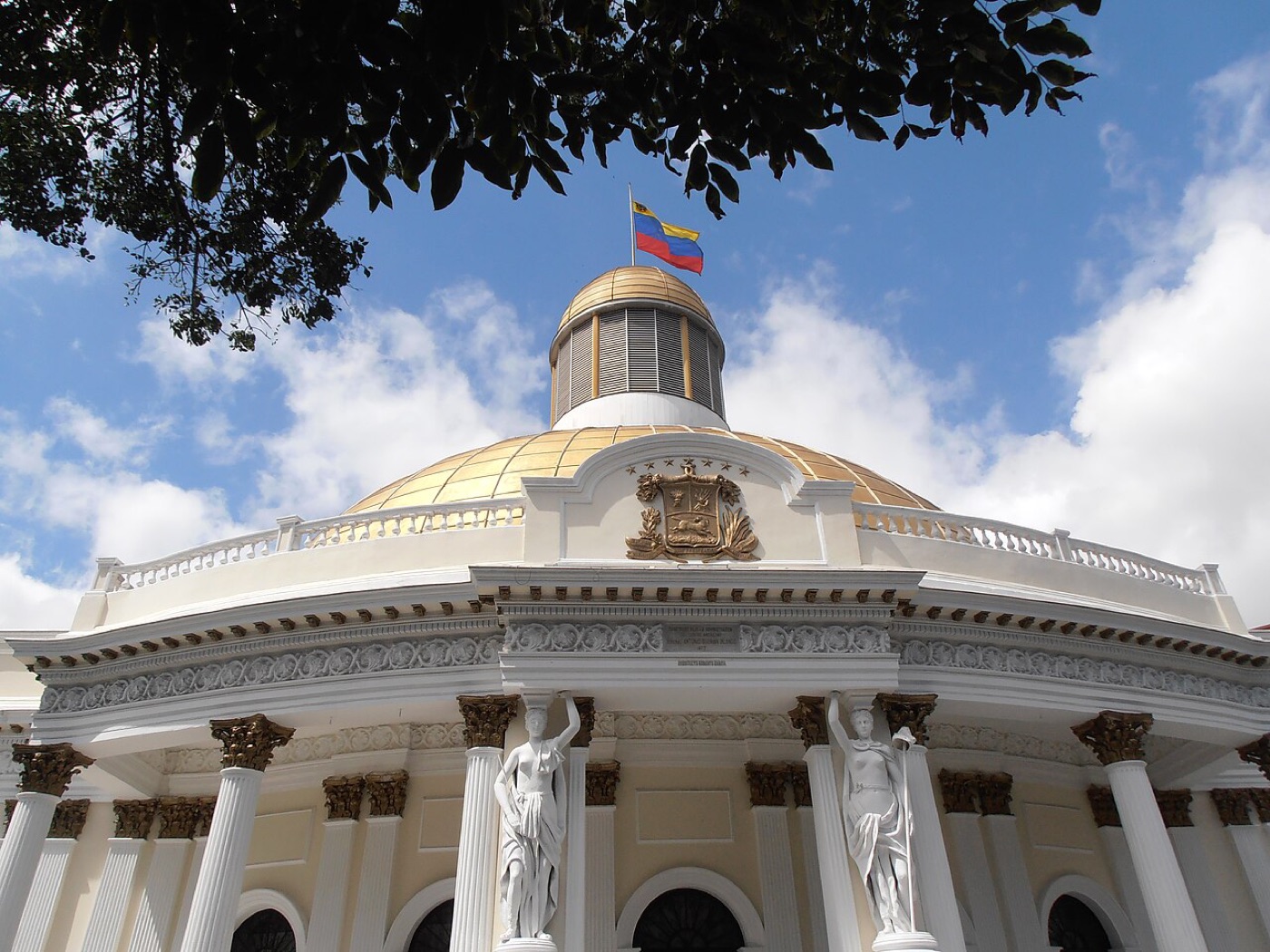
Last December, Kingstonmouth.com wrote that Venezuela stood at a crossroads. Weeks later, on 3 January 2026, United States forces seized Nicolás Maduro and his wife, Cilia Flores, in Caracas and flew them to New York, where he faces drug trafficking charges that he denies. His vice president, Delcy Rodríguez, who first called the operation an "illegal and illegitimate kidnapping", became acting president and has since chosen to work with Washington.
On Wednesday, 21 October, the third round of transition talks between Rodríguez's government and the opposition delegation of the National Assembly elected in 2015 came to a close in Caracas. There were agreements on political disqualifications and on Venezuela's gold frozen in London. There was no election date. So we ask the real question: is this a transition to democracy, or a managed pause dressed up as one, and what does either outcome mean for the Caribbean?
Recent Developments
According to Anadolu Agency, a joint statement signed by Jorge Rodríguez, president of the pro-government parliament, and Dinorah Figuera, who heads the 2015 National Assembly delegation, commits both sides to review the Organic Law of the Comptroller General's Office. That law sits behind the administrative bans used against opposition leaders. Machado, the Nobel Peace Prize laureate, is still the most prominent figure barred from seeking office. The delegations also agreed to set up a joint commission to work with UK institutions to release Venezuelan gold reserves held at the Bank of England.
Today, 22 October, the National Assembly is due to swear in a 23-member committee (12 civil society representatives and 11 legislators) to select the final list of Supreme Court justices. A fourth round of talks is scheduled for November, Jorge Rodríguez told TASS.
Delcy Rodríguez told the UN General Assembly in September: "Elections will be held in Venezuela." But she named no date, saying the people would decide when. Washington has set none either.
The Opposition's 14 Points
On Sunday, 18 October, the Democratic Unitary Platform (PUD) presented a 14-point document drafted with civil society. Biagio Pilieri of Convergencia read it out. It reaffirms María Corina Machado's leadership. It demands the full release of political prisoners, the return of exiles, an end to persecution and transitional justice. It makes presidential elections the priority and calls for political rights to be restored without disqualifications. Point 13 rejects any violent or irregular action that threatens the process.
The tension is plain. Machado is not at the Caracas table. In an interview with the New York Times, she said Washington had left her out of the negotiations. The State Department replied that her party, Vente Venezuela, was invited and that she has every right to enter her country whenever she wants. Her platform called nationwide protests for today to demand an election date.
Supporters of the talks argue that slow, technical progress (a new Supreme Court panel, reopened news portals, a review of the bans) is how durable democracy is built. Critics counter that every month without a date strengthens those who already hold power, and that a dialogue without the movement that won the opposition primary is incomplete.
Political Prisoners: Progress, Not Yet Justice
There has been real movement. US Secretary of State Marco Rubio said in August that 1,046 Venezuelans had been released since 3 January. But the rights group Foro Penal still counted 322 political prisoners as of 5 October, 140 of them military personnel and 170 without a conviction. In our view, one political prisoner is one too many, and releases must be complete and unconditional, not rationed as bargaining chips.
What This Means for Jamaica and the Caribbean
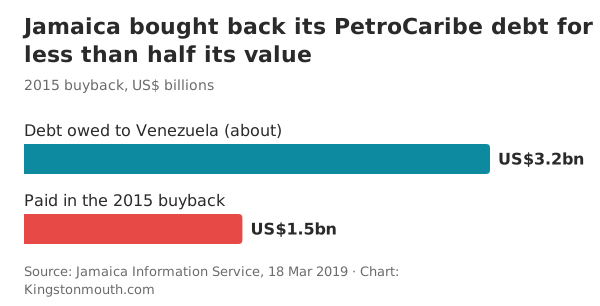
PetroCaribe's long shadow. Jamaica joined PetroCaribe in August 2005, and in 2015 bought back a debt of about US$3.2 billion for US$1.5 billion. That chapter is not closed. The Gleaner reported last month that Jamaica holds about US$45 million owed to Venezuela in a segregated Bank of Jamaica account, because US sanctions bar payment to Caracas. About US$28.3 million has already gone into a court-ordered receivership for ConocoPhillips. PDV Caribe is also reported to be seeking about US$250 million over the 2019 compulsory acquisition of its 49 per cent stake in Petrojam. A government that is recognised and lawfully constituted in Caracas is the only partner with whom these debts can be settled cleanly.
Oil and energy prices. Oil makes up about 62 per cent of Jamaica's energy supply, the government told US investors. Venezuela's output has recovered to around 1.25 million barrels a day, a US Energy Department official said in August, with more than half a million barrels a day going to the United States. Yet Jamaica's own filing says it receives no oil from Venezuela and does not expect to. A Venezuelan recovery that serves only Washington's refineries does little for Caribbean households paying for fuel and electricity.
Migration. Trinidad and Tobago hosted about 44,800 Venezuelan migrants, refugees and asylum seekers as of November 2023, the highest per capita in the Caribbean, according to ACAPS. Most lack regular status. People return home when there is work, safety and a vote that counts. A stalled transition keeps them here, in limbo.
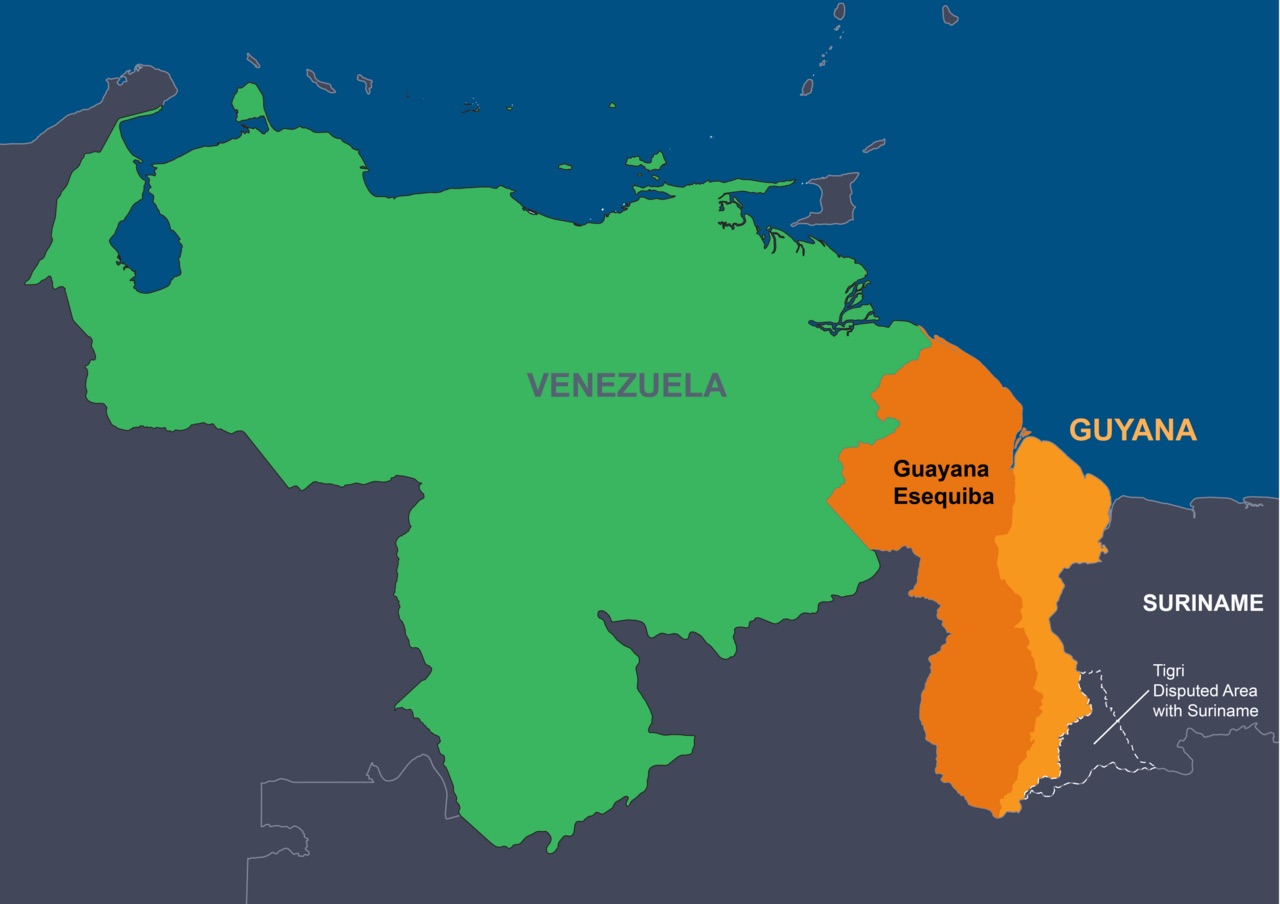
Guyana and the Essequibo. CARICOM's own member is in the line of fire. At the International Court of Justice hearings in May, Delcy Rodríguez said Venezuela did not recognise the court's jurisdiction. On 24 September, Guyana's President Irfaan Ali told the UN: "We urge Venezuela to abide by the forthcoming ruling in accordance with their obligation under the UN Charter." A judgment is expected in the coming months. A Caracas leadership that owes its future to the ballot box, rather than to nationalist rallying, is far more likely to respect it.
CARICOM's Voice on Sovereignty
On the day of the US operation, the CARICOM Bureau of Heads of Government, then Jamaica, Saint Kitts and Nevis and Saint Lucia, said the Community was "firmly committed to the fundamental principles of international law and multilateralism" and called for dialogue. Prime Minister Andrew Holness was more guarded: "My job… is to keep Jamaica safe. Not to steer into waters for which we don't have to go." The PNP urged CARICOM to reassert the Caribbean as a "Zone of Peace". Former Prime Minister Bruce Golding warned in the Observer that "the threat of recolonisation is upon us".
Both concerns can be held at once. Kingstonmouth.com does not endorse the use of force to change a government in our region. But we also cannot pretend that the Maduro years delivered freedom. The question now is not whether the intervention was right; it is whether Venezuelans will get the democracy that was promised in their name.
The Way Forward
For us, the path is clear. First, an election date, a real one, with a newly appointed electoral council and independent observers from the OAS, the UN and CARICOM itself. Second, the release of every remaining political prisoner and the lifting of all politically motivated bans, Machado's included. Third, a Caribbean seat at the table. CARICOM has more at stake in Venezuela's future than almost anyone outside it: our energy bills, our debts, our coastlines and Guyana's borders.
We challenge CARICOM heads to stop speaking only in principles and to offer practical help: observers, mediation and a regional plan for Venezuelan migrants. A transition without a date is not yet a transition. Venezuela's people deserve their vote, and the Caribbean deserves a stable, democratic neighbour.
Annieth Woollery is a contributing writer for Kingstonmouth.com. Kingstonmouth.com has published independent commentary on Politics, Human Rights and International Development for over ten years. Readers wishing to comment may contact us at kingstonmouth63@gmail.com or on our Facebook and X pages.
Sources
- Venezuela government, opposition reach key agreements in 3rd round of transition talks — Anadolu Agency, 21–22 October 2026
- Third round of talks between government, opposition ends in Venezuela — TASS, 22 October 2026
- Plataforma Unitaria Democrática (PUD) presenta 14 propuestas para impulsar la transición democrática en Venezuela — El Informador, 18 October 2026
- Machado says US excluded her from Venezuela talks — The Rio Times, October 2026
- Venezuela's Delcy Rodriguez promises elections at UN, gives no date — Al Jazeera, 24 September 2026
- Venezuela's military recognizes Vice President Delcy Rodriguez as acting leader after Maduro's capture — CBS News, 4 January 2026
- Venezuela says 131 political prisoners freed amid post-Maduro talks — Al Jazeera, 15 August 2026
- Foro Penal contabiliza 322 presos políticos en Venezuela — Foro Penal, 9 October 2026
- Jamaica holds US$45m owed to Venezuela in frozen account — Jamaica Gleaner, 25 September 2026
- CEO says PCDF has accomplished mission — Jamaica Information Service, 18 March 2019
- US refineries taking in half of Venezuela's oil output, official says — Al Jazeera, 19 August 2026
- Trinidad and Tobago country profile — ACAPS
- Essequibo: Guyana urges Venezuela at 81st UN Assembly to heed coming ICJ ruling — The Rio Times, September 2026
- Statement from the Bureau of the Conference of CARICOM Heads of Government on military action in Venezuela — CARICOM, 3 January 2026
- 'My job is to keep Jamaica safe...not invite problems' says Holness amid calls for position on US capture of Venezuelan president — Jamaica Gleaner, 9 January 2026