
The Kernel: Peter Thiel and the Ideology of the PayPal Mafia (Part 1)
By Donovan Reynolds, a political commentator and trained diplomat
Who owns, who decides, who pays
At Kingston Mouth, we have always kept one eye on the billionaire class. From the planters who were compensated at emancipation while the formerly enslaved received nothing, to the bauxite companies and the tourism conglomerates, our writing has returned to the same three questions: who owns, who decides, and who pays? The billionaires have changed their clothes, from planters’ linen to hoodies and fleece vests, but the questions have not changed.
I have made this argument in these pages before. In October 2022, in an essay on the neo-feudalism of the new billionaire class, I asked whether Bill Gates and Jeff Bezos were philanthropists or impostors. Drawing on Yanis Varoufakis’s idea of “techno-feudalism”, I argued that a handful of tech fortunes had become a new class of economic feudal lords: men who buy up farmland by the hundred thousand acres, use charitable foundations to polish their image and win influence, spend millions a year on lobbyists, and grow too powerful to pay their fair share of tax. I called them wolves dressed in generous sheep’s clothing, and I called for a global wealth tax backed by the United Nations.
That essay was about billionaires who sought to influence government from outside. Four years on, the danger has moved a step further. Peter Thiel’s network does not simply lobby the state; it has placed its own people inside it, written its weapons plans and run its cost-cutting. If Gates and Bezos were feudal lords at the castle gate, the PayPal Mafia has walked through it.
Today the most powerful answer to all three questions sits in a small circle of men from California. Two decades ago, they built an online payments company called PayPal. They sold it, scattered, and went on to found or bankroll Tesla, SpaceX, LinkedIn, YouTube, Palantir and much of what we now call Big Tech. Silicon Valley gave them a half-joking name: the PayPal Mafia. The joke has worn thin. Members of that circle now sit at or near the centre of power in Washington, shaping policy on artificial intelligence, crypto, surveillance, immigration and war.
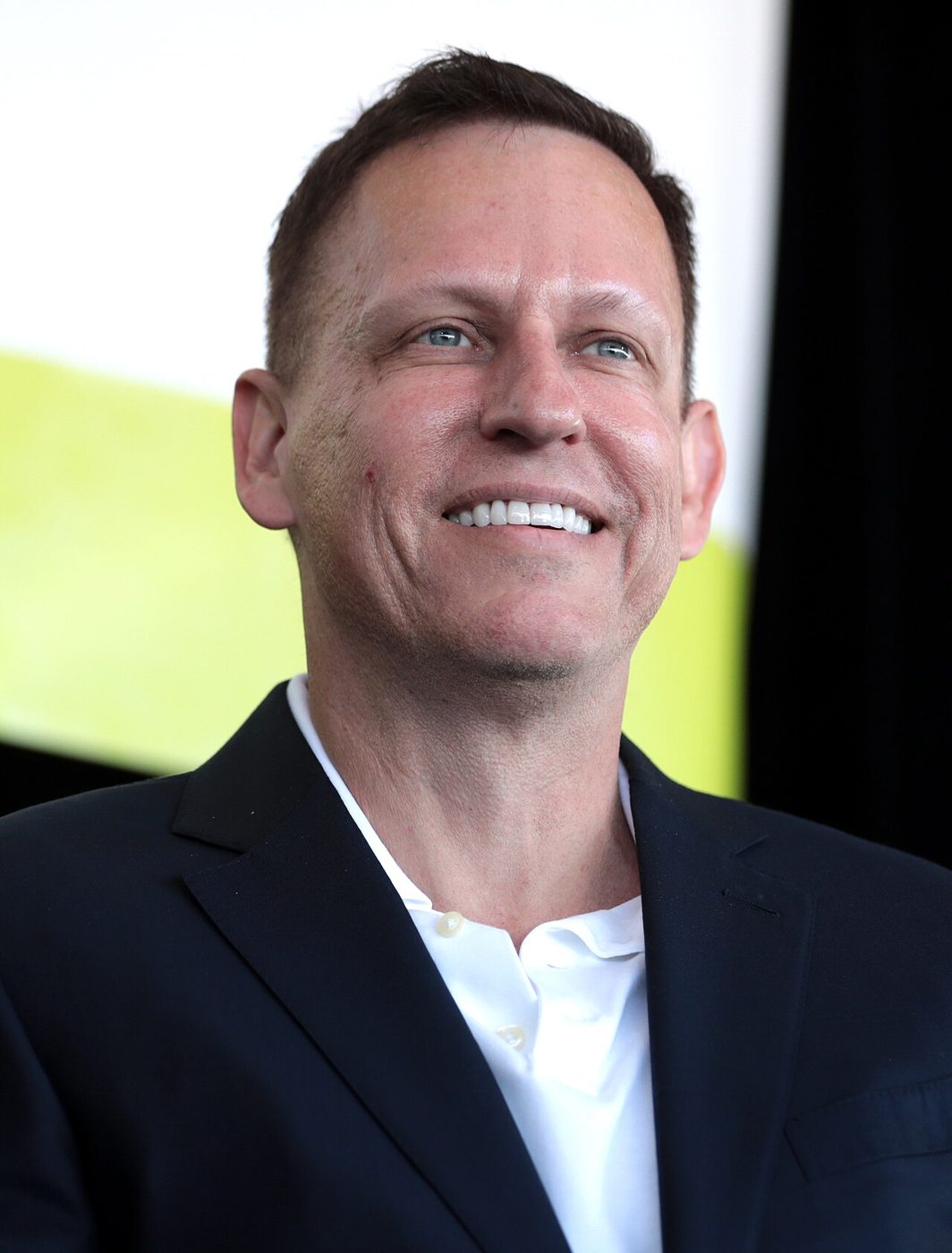
Against this backdrop, it is tempting to focus on the loudest member, Elon Musk. Yet the more important figure is the quieter one. Peter Thiel, PayPal’s co-founder, is the kernel of this movement: the man whose money, mentorship and ideas hold the network together. To understand him, we draw on a new shelf of critical work: Gil Durán’s The Nerd Reich (2026), Karen Hao’s Empire of AI (2025), Timnit Gebru’s research on the ideologies behind artificial intelligence, Naomi Klein and Astra Taylor’s End Times Fascism (2026), and Sharon Weinberger’s Valley of Death (2026). Read together, they describe a movement with a creed, an empire, a faith and an arsenal, and a president who opened the doors to all four.
The roots: apartheid’s long shadow
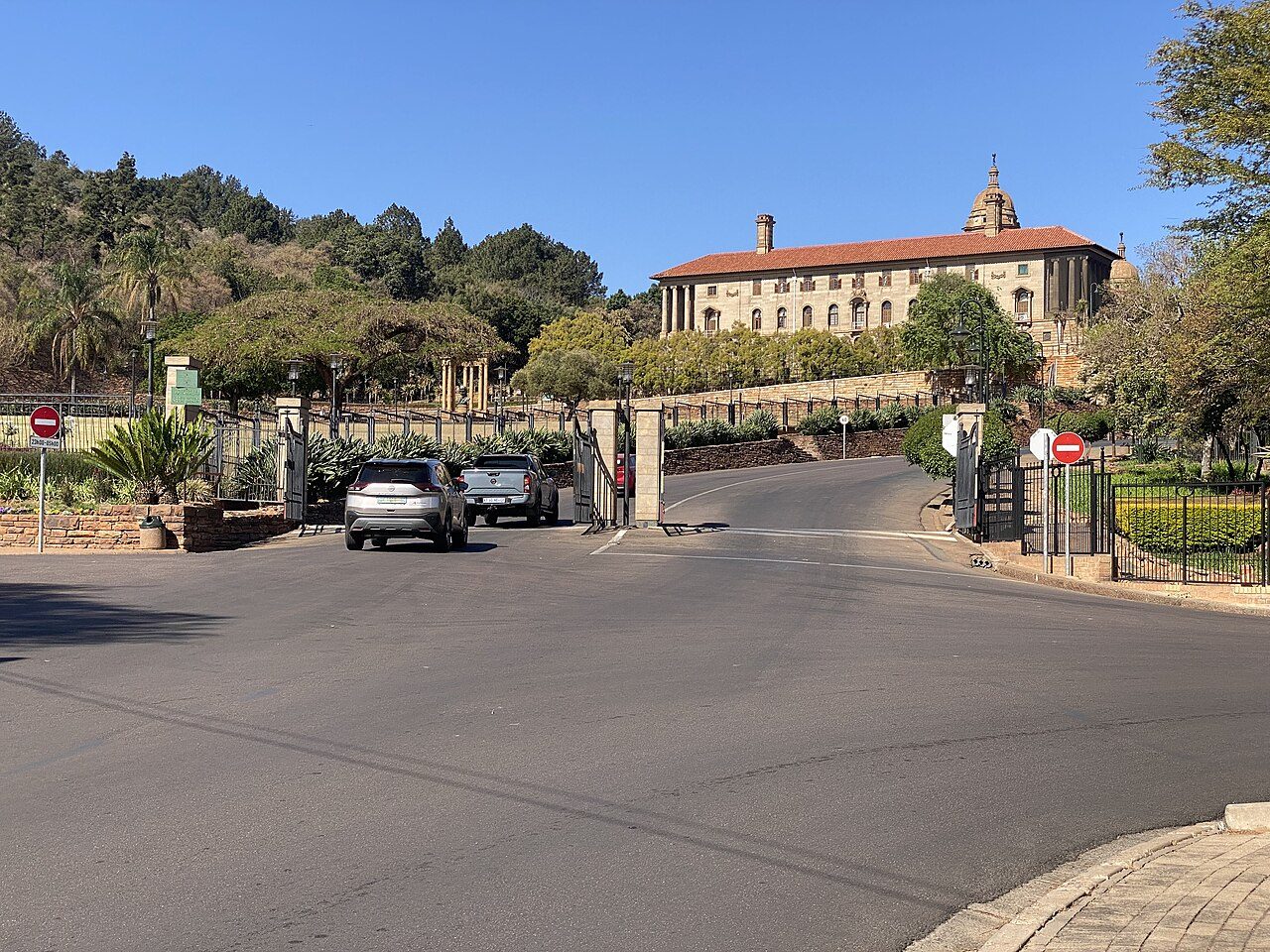
Before the creed, there was a childhood. A striking number of the PayPal Mafia’s leading figures grew up in, or came from, apartheid South Africa, a fact the former Guardian correspondent Chris McGreal has traced in detail.
Elon Musk was born in Pretoria and lived in South Africa until he was about 17. His maternal grandfather, Joshua Haldeman, moved there from Canada in 1950, according to McGreal, because he liked the newly elected apartheid government. Musk’s own father has called that grandfather an open Nazi sympathiser.
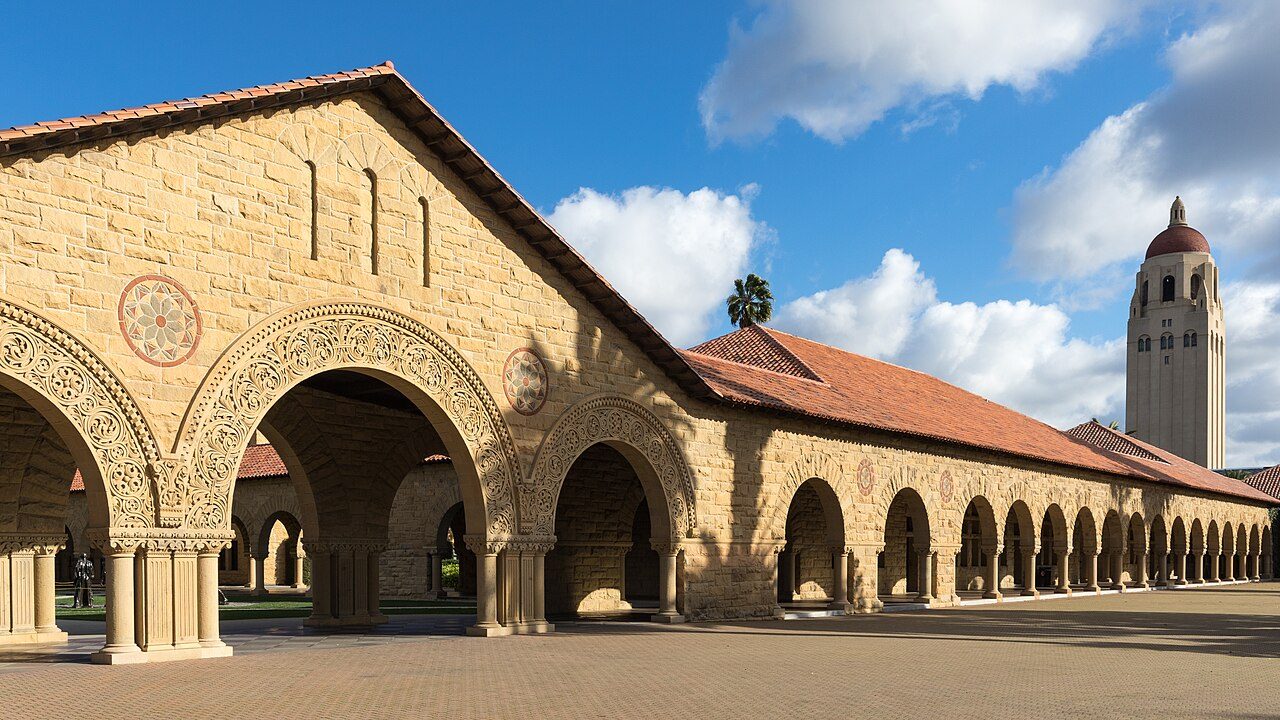
Peter Thiel, though born in Germany, spent years of his childhood in South Africa and in South West Africa, now Namibia, then run by Pretoria, where his father worked as a mining engineer. His biographer Max Chafkin records that the student campaigns for divestment from apartheid at Stanford felt at least a little personal to Thiel, who spoke fondly of his African childhood.
David Sacks was born in Cape Town and left at five, growing up in a white South African diaspora family in Tennessee.
Roelof Botha, PayPal’s chief financial officer, is the grandson of Pik Botha, apartheid South Africa’s last foreign minister.
At PayPal, Musk was briefly chief executive, while Botha and Sacks became the company’s chief financial and chief operating officers.
We should be careful here. The South African writer Jonny Steinberg has warned that explaining these men through their apartheid childhoods leads to facile conclusions, and children do not choose where they grow up. Yet the pattern is hard to ignore. These men learned about power in a society where a small white minority used law, land and security forces to rule a disenfranchised majority, and where whole territories were carved out for some and closed to others. Those are not the habits of mind one would hope to find among the people now designing the surveillance and weapons systems of the world’s most powerful state.
The creed: escaping democracy
Thiel’s story begins with a book. In 1997, James Dale Davidson and William Rees-Mogg, a former editor of The Times, published The Sovereign Individual, which predicted that the internet would let the wealthy escape the nation state and its taxes. Most reviewers dismissed it. As Gil Durán shows in The Nerd Reich, it left a lasting mark on a young Stanford graduate named Peter Thiel, who later wrote the preface to its 2020 reissue.
Building on that vision, Thiel set out his politics plainly in 2009, in an essay for the libertarian Cato Institute called “The Education of a Libertarian”. “I no longer believe that freedom and democracy are compatible,” he wrote. Politics could no longer deliver the freedom he wanted, so the task was to escape it altogether, through cyberspace, outer space and floating cities at sea.
To that he added a second doctrine, which he preached to a generation of founders: competition is for losers, and monopoly is the goal. Put together, the two ideas form a coherent worldview. Democracy is an obstacle, competition is waste, and the future belongs to a few exceptional men who own the platforms everyone else must use. Durán also shows how Thiel drew close to Curtis Yarvin, a blogger who sketched a blueprint for replacing democracy with a ruler run like a chief executive, and whose start-up Thiel helped fund.
The network: from PayPal to the White House
What makes Thiel the kernel, rather than just another rich man with opinions, is how he turned that creed into a network. He co-founded Palantir, the data company with the CIA among its early backers. He was Facebook’s first outside investor. He mentored Sam Altman and was among the original backers of OpenAI. Through his Founders Fund, he invests in Anduril, which makes drones and autonomous weapons.
The same pattern runs through politics, and nowhere more clearly than in the career of JD Vance. The two met at Yale Law School in 2011, when Thiel gave a talk there. Vance later wrote that the talk was the most significant moment of his time at Yale; he emailed Thiel, who invited him to California. Vance went on to work at Thiel’s venture fund, Mithril Capital, then launched his own fund, Narya Capital, with Thiel’s money behind it. Thiel even shaped Vance’s faith: Vance credits him with the ideas that led to his conversion to Catholicism.
There was one obstacle. In 2016, Vance had been one of Trump’s fiercest critics, calling him “reprehensible” and privately wondering whether he might be “America’s Hitler”. When Vance decided to run for the Senate in Ohio, he needed Trump’s blessing. So, in February 2021, it was Thiel who ushered him into Trump’s office at Mar-a-Lago. According to The New York Times, Trump confronted Vance with printouts of his past attacks. Vance apologised, and went on to apologise publicly and delete his old criticisms.
Thiel then bankrolled the campaign, putting a record US$15 million behind Vance’s 2022 Senate run. Trump endorsed him, and Vance won. Two years later, Trump chose him as his running mate, and today the man Thiel discovered at a law school lecture is Vice President of the United States, one step from the presidency. Durán calls Vance Thiel’s most successful political investment.
Vance was not the only placement. When Trump returned to power, NBC News counted at least ten of Thiel’s former colleagues, employees or partners heading into the administration. David Sacks, who started at PayPal under Thiel and co-wrote a book with him, became the White House adviser on AI and crypto. Musk, whom Thiel once ousted as PayPal’s chief executive, was handed the so-called Department of Government Efficiency.
The masks come off
It is worth remembering how different Silicon Valley looked a decade ago. Under Barack Obama, the tech industry wore a liberal face. Many of its leaders broadcast their votes for Obama in 2008 and 2012 and for Hillary Clinton in 2016, and put money behind the Democratic Party. Musk himself gave to Obama and Clinton in 2007, later said he had strongly supported Obama, and claimed he voted Democrat up to 2020. Santa Clara County, the heart of the Valley, voted 73 per cent for Joe Biden that year.
That liberal image served the industry well. It brought access to the Obama White House, favourable regulation and the public’s trust, while the deeper politics of some of its most powerful investors went largely unexamined. Thiel was the exception who never hid. He gave US$2.6 million to Ron Paul’s 2012 campaign, backed Ted Cruz, and in 2016 took the stage at the Republican convention to endorse Trump. For years, Silicon Valley treated him as an eccentric outlier.
Then the masks came off. Musk voted Republican for the first time in 2022, bought Twitter, and by 2024 had poured more than US$250 million into electing Trump. Marc Andreessen and others who had once backed Democrats announced they would do the same. Under Trump, the outlier became the centre. What looked like a sudden conversion was, in large part, the network revealing that Thiel’s politics had been its politics all along, once the price of saying so had fallen.
The creed had found its way into government. What it would do there is best understood through the empire it was already building.
The empire: what the network extracts
Karen Hao, a former MIT Technology Review and Wall Street Journal reporter, was the first journalist to profile OpenAI. Her book Empire of AI draws on some 300 interviews. OpenAI declined to cooperate, and Altman has criticised the book publicly.
Hao’s central argument is that the AI industry has become a new kind of empire. It does not conquer territory. Instead, it takes what it needs from everyone else: the work of artists and writers, the personal data of billions, the energy and water consumed by its data centres, and the cheap labour of the Global South.
Thiel’s fingerprints are all over her story. Altman counted Thiel as a mentor and absorbed his monopoly strategy: build something far better than any rival, move fast and dominate. The empire Hao describes is, in large part, the Thiel creed put into practice: concentrated, unaccountable and convinced that its dominance is a gift to humanity.
Likewise, the costs fall where empires have always placed them. Hao reports on workers in Kenya paid a few dollars an hour to label violent and abusive material so that chatbots can be made “safe” for Western users. She documents data workers in crisis-hit Venezuela doing the piecework that trains these systems, and communities in Chile and Uruguay fighting data centres over scarce water. The greatest harms, she argues, fall on communities far from Silicon Valley.

The faith: a new eugenics and the end times
Yet an empire needs a story to justify itself, and this one has found a religion. Timnit Gebru, the computer scientist who co-led Google’s AI ethics team until she was forced out in late 2020, has done more than anyone to name it. In 2023, she and the philosopher Émile P. Torres coined the term TESCREAL for a bundle of seven overlapping beliefs popular in Silicon Valley, including transhumanism, effective altruism and longtermism. Their paper argues that these ideas grow directly out of twentieth-century eugenics: a project to engineer “better” humans and, eventually, to transcend humanity altogether. They liken it to a secular faith, with its own heaven, salvation and chosen people.
Thiel has taken that faith a step further, into the language of scripture. In autumn 2025, he gave a series of private lectures in San Francisco on the Antichrist, after earlier off-the-record talks at Oxford, Harvard and the University of Austin. According to recordings obtained by The Washington Post, he cast climate activists and AI critics as the Antichrist’s servants, naming Greta Thunberg and the AI-safety researcher Eliezer Yudkowsky. The tour has since travelled to Paris and Rome and, this year, to a paid four-part run in Nashville.
In Thiel’s telling, the Antichrist will exploit fear of catastrophe, whether nuclear, climate or AI, to impose a one-world government in the name of peace and safety. Regulation becomes heresy, and the people warning of danger become the danger. Durán notes the irony that critics spotted at once: a charismatic figure seeking total control through technology sounds rather like Thiel himself.
This brings us to Naomi Klein and Astra Taylor. Their 2025 Guardian essay, “The Rise of End Times Fascism”, grew into the book End Times Fascism: And the Fight for the Living World. They argue that today’s far right is no longer simply exploiting disasters, the “shock doctrine” Klein described two decades ago. Instead, they write, right-wing leaders and their wealthy allies are provoking, planning and seeking to profit from apocalypse itself. Klein calls it fascism without a horizon for the future.
The book identifies three groups that have converged around this outlook: religious extremists, technofascists and ethnonationalists. Thiel sits squarely in the second. Its defining image is the bunker: the wealthy nation as fortress, the private island as refuge, and the literal bunker, stocked for collapse, as escape hatch. Some dream of Mars; others buy land in New Zealand or back corporate “freedom cities” beyond the reach of ordinary law. The book even recounts an “Apocalypse Ball” hosted by Thiel’s own venture firm.
For people in the Caribbean, raised on Revelation in church on Sunday, the danger is easy to miss. Apocalyptic language can make a profit-driven agenda sound like divine destiny. Read alongside Klein and Taylor, Thiel’s crusade against those who warn of catastrophe looks like no accident: if collapse is coming anyway, the rational course for the few is to own the lifeboats and stop anyone from slowing the ship.
The sources for this essay are listed at the end of Part 2.
Get Kingston Mouth in your inbox
Donovan Reynolds' latest articles and videos on Jamaica, the UK and the world, plus occasional sponsored offers. Unsubscribe any time.
Enjoyed this? Kingstonmouth.com is independent and reader-supported.
☕ Buy us a coffee
Comments
Loading comments…
Leave a comment