
The Kernel: Peter Thiel and the Ideology of the PayPal Mafia (Part 2)

The arsenal: the state as customer
However, ideology alone does not make an empire. It needs weapons and a state willing to buy them. This is the story Sharon Weinberger tells in Valley of Death: How Big Tech Is Fueling the Future of War. Weinberger, a veteran national security reporter and now editor-in-chief of the Bulletin of the Atomic Scientists, describes a new “Pentagon–Silicon complex” in which Palantir, Anduril, SpaceX and their billionaire founders are reshaping how America fights.
Her first lesson is that Silicon Valley was never the pure child of free enterprise it claims to be. The military and the spy agencies helped create it. Weinberger shows how the CIA threw Steve Jobs a lifeline during his years in exile from Apple, investing heavily in his company NeXT and buying thousands of its computers. Years later, in 2005, In-Q-Tel, the CIA’s venture capital arm, put US$2 million into a young surveillance start-up. That company was Thiel’s Palantir.
Her second lesson is more frightening. Weinberger reports that in 2013, Pentagon analysts studied whether a rogue billionaire could buy, sell or even build a nuclear weapon, a question made urgent by the rise of figures like Musk. They concluded that a wealthy individual could plausibly have the means. The fear that once attached to rogue states now attaches to rogue fortunes. As one review of her book put it, the question is no longer whether Silicon Valley serves America, but whether the American state now serves the Valley.
The enabler: Trump opens the doors
None of this would have moved so fast without Donald Trump. Thiel supplied the ideas and the people; Trump supplied the keys to the state. His contribution came in two moves: he let the network take apart the public sector, then he paid it to rebuild the state’s most powerful parts in private hands.
The first move was DOGE. From early 2025, Musk and a small team embedded themselves in federal agencies, combed through sensitive databases, cancelled contracts and pushed for mass layoffs. By the end of that year the federal workforce had fallen by about 271,000 people, to 2.744 million, according to St Louis Federal Reserve data. The US Agency for International Development, which funded health and disaster programmes across the Caribbean and the Global South, was effectively dismantled after Musk called it a criminal organisation and boasted of feeding it into the wood chipper. Musk set a target of US$2 trillion in savings; DOGE claimed US$215 billion, a figure independent experts have questioned. Meanwhile, Musk ran DOGE while his own companies held billions of dollars in government contracts and were regulated by agencies he was cutting. He left in May 2025, and DOGE has since been wound up.
The second move was the money. While civilian agencies were stripped, the network’s defence firms were enriched. In August 2025, the Army consolidated 75 Palantir contracts into a single agreement worth up to US$10 billion over ten years. In March 2026, it did the same for Anduril, with a ceiling of US$20 billion. SpaceX has collected more than US$8 billion in defence contracts so far this year, mostly for military satellites. Palantir also holds contracts with ICE to build ImmigrationOS, a system to track and remove undocumented migrants. Trump himself remarked at an AI summit that the government buys “a lot of things from Palantir.”
Then, in September 2026, Defence Secretary Pete Hegseth chose Musk to co-lead Project Meridian, a Pentagon panel mapping the weapons America will need for the next ten to twenty years, alongside Palmer Luckey of Anduril and former House Speaker Newt Gingrich. Watchdog groups, including Public Citizen and the Project On Government Oversight, have sued, arguing that 19 of the panel’s 21 members come from private industry and could profit from its advice. The Pentagon says the analysis is done by the independent non-profit MITRE, with safeguards against conflicts of interest.
Here lies the contradiction at the heart of the arrangement. The administration says it is cutting waste and buying cheaper, faster technology, and its supporters argue that the old defence giants were slow and overpriced. Yet the men now writing the shopping list, and selling the goods, belong to a network whose chief theorist declared that freedom and democracy are not compatible. A democracy is handing its surveillance systems, its weapons and its picture of future war to people who have said, in their own words, that they would rather escape it.
The check: democracy answers back
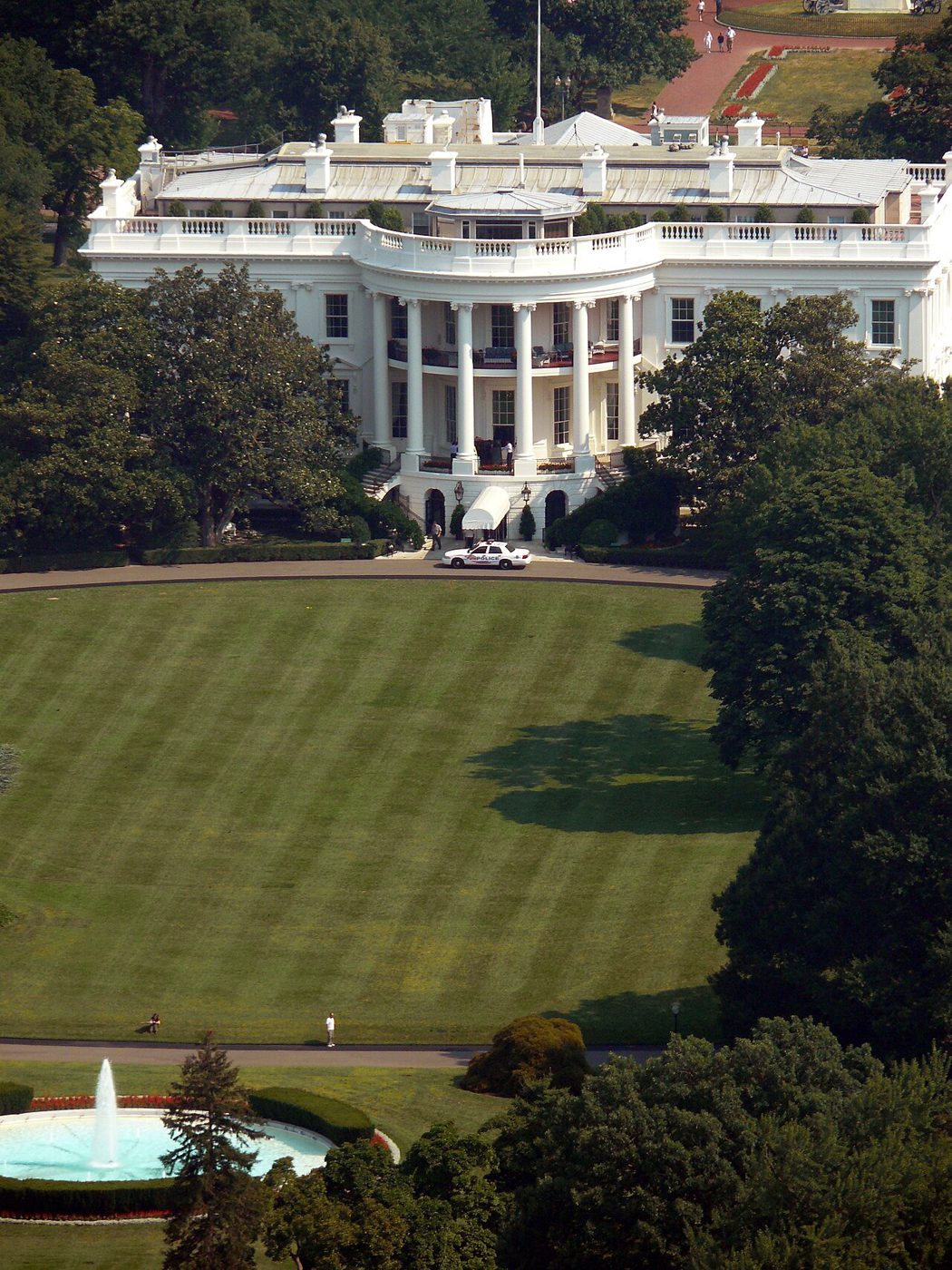
Yet democracy, which Thiel wrote off, still has a voice. In the US midterm elections on 3 November 2026, American voters chose a new Congress. As of 13 November at 9:48pm GMT, the Associated Press’s count gave Democrats 256 House seats won to the Republicans’ 169, with ten seats not yet counted as won for either party. In the Senate, AP’s count gave the Democrats a total of 55 seats, including two independents who caucus with them, and the Republicans 44, with one seat not yet counted as won or held over for either party. These figures may change as counting finishes. (Our own reading of AP’s count marks Democrats as having passed the threshold for a House majority and for control of the Senate; that label is ours, not a call by AP.)
The US Constitution gives Congress three powerful tools, and the new Congress that sits from January can choose to turn them on the network.
The purse. Congress writes the budget. It can attach conditions to Pentagon money, demand competitive bidding, and question enterprise agreements worth US$10 billion and US$20 billion.
The subpoena. Committee chairs can call witnesses and demand documents. DOGE’s access to sensitive databases, Palantir’s work for ICE, and the conflicts of interest on Musk’s weapons panel are all natural subjects for hearings.
The Senate’s consent. Senior appointments and treaties need Senate approval, so Thiel’s pipeline of protégés into government now runs through a newly elected Senate.
However, we should not overstate the change. Congress cannot easily undo contracts already signed, and the executive keeps wide power over defence and immigration enforcement. The tech firms give to both parties, and some Democrats share their enthusiasm for AI and defence technology. Oversight from Congress can slow the network down; on its own, it cannot dismantle it. Supporters of the administration will also argue that voters were punishing prices and cuts, not passing judgment on Silicon Valley.
Still, the result matters as a symbol. Thiel argued in 2009 that freedom and democracy could not live together, and his network has spent two years acting as though the voters no longer counted. On 3 November, the voters reminded them that they do.
The stakes for the Caribbean
It would be easy to treat all this as an American quarrel. That would be a mistake. Walter Rodney taught us to ask who extracts value from whom, and how dependency is built. The Thiel network gives that old question new answers.
First, extraction. The data, labour, water and minerals that feed the empire Hao describes come disproportionately from the Global South, including our neighbours in Venezuela and Central America. Small states that become cheap annotation hubs or data-centre sites risk repeating the plantation pattern in digital form: raw material out, profit and control elsewhere.
Second, surveillance and deportation. Palantir earned US$81.1 million from ICE contracts in 2025, four times the previous year, according to CorpWatch. Those systems are pointed squarely at Caribbean communities in the United States, and at the deportees who land back in Kingston, Nassau and Port-au-Prince.
Third, sovereignty. Klein and Taylor point to Próspera, a privately governed charter city on the Honduran island of Roatán, in the western Caribbean, which offers investors a jurisdiction where ordinary laws and taxes bend to business. Thiel’s dream of escaping politics has found a physical address, and it is in our sea. Caribbean states, short of revenue and long used to selling citizenship by investment, are natural targets for the next charter-city pitch.
Finally, regulation. Thiel’s crusade against those who would slow technology down is, in practice, a crusade against the climate and AI rules that small island states most need. As CARICOM fights at COP31 for loss and damage finance, it faces an ideology that treats the very warning of catastrophe as heresy.

Conclusion: refusing the bunker
The PayPal Mafia is often told as a story of clever entrepreneurs who got rich and then got political. Read through Durán, Hao, Gebru, Klein, Taylor and Weinberger, it looks more like the founding of a new governing class, with Peter Thiel as its chief theorist. Its creed is that democracy and freedom cannot coexist, that monopoly is virtue, that regulators serve the Antichrist, and that when the world burns, the right people will be safe, and armed.
At Kingston Mouth, our answer must be the opposite. Our history is one of people who were treated as raw material and who built, against the odds, democratic and communal institutions of their own. Klein and Taylor end with a call to stay and fight for the living world rather than flee it. For small nations, that means regional unity on AI and data rules, firm conditions on any tech investment, and a diplomacy that names extraction for what it is, whether it arrives in a slave ship, a bauxite contract or a server farm. Whether Washington’s new Congress uses its mandate to rein in the Nerd Reich, or simply to make deals with it, is a question we will keep watching. Who owns, who decides and who pays: the questions remain ours to ask.
Donovan Reynolds is a political commentator and trained diplomat. He writes for Kingstonmouth.com.
Sources
- Peter Thiel – The Education of a Libertarian, Cato Unbound (2009)
- NBC News – The PayPal Mafia shaping Trump’s administration
- Fortune – Peter Thiel’s network in the Trump White House
- AFP via The Star – Silicon Valley’s right flank takes on Washington
- Democracy Now! – Gil Durán on The Nerd Reich
- NPR Fresh Air – The Nerd Reich
- Ahram Online – Review of The Nerd Reich
- SuperSummary – Summary of The Nerd Reich
- Newser, on The Washington Post’s report – Thiel’s Antichrist lectures
- The New Republic – Thiel’s obsession with the Antichrist
- Gizmodo – Thiel’s Antichrist lectures in Nashville
- Rest of World – Interview with Karen Hao on Empire of AI
- IE Insights – How AI companies became empires
- The Nation – Review of Empire of AI
- Gebru and Torres – The TESCREAL bundle, First Monday (2024)
- Wikipedia – TESCREAL
- Naomi Klein and Astra Taylor – The Rise of End Times Fascism (2025)
- Laura Flanders & Friends – Klein and Taylor interview
- NPR – Review of End Times Fascism
- Dissent – Exit Strategy: review of End Times Fascism
- Democracy Now! – Sharon Weinberger on Valley of Death
- Los Angeles Review of Books – War Bros: review of Valley of Death
- Kirkus – Review of Valley of Death
- The Tech – What’s next for defense startups?
- Hachette – Valley of Death
- Reuters via GV Wire – Palantir and US government contracts
- CorpWatch – MAGA Inc.: Palantir
- Multinationales – Palantir at the heart of the Trump administration
- The Fiscal Times – DOGE is officially done
- New York Post via AOL – Musk celebrates 9% cut in federal workers
- Newsweek – DOGE officially ends: a timeline
- AP via News4Jax – A year after DOGE cuts
- Axios – Palantir’s $10 billion Army contract
- Nextgov – Army and Anduril enter $20B enterprise agreement
- El Cronista – Musk helping the Pentagon write a weapons wish list
- Chris McGreal via The Namibian – How the roots of the PayPal mafia extend to apartheid South Africa
- Democracy Now! – The PayPal Mafia: meet the South African oligarchs surrounding Trump
- Daily Maverick – How South African men are changing the course of American democracy
- Daily Investor – The three South Africans who ran the PayPal Mafia
- Washington Post via ADN – The Silicon Valley realignment leading tech titans to Trump
- Newsweek – Why Elon Musk is supporting Donald Trump
- PBS NewsHour – Peter Thiel explains why he supports Trump (2016)
- Mother Jones – 12 things to know about Peter Thiel (2016)
- New York Times via Yahoo – How JD Vance won over Donald Trump
- Axios – Vance’s journey from “Never Trump” to VP nominee
- The Nerd Reich – Communion: Thiel’s role in Vance’s conversion and career
Get Kingston Mouth in your inbox
Donovan Reynolds' latest articles and videos on Jamaica, the UK and the world, plus occasional sponsored offers. Unsubscribe any time.
Enjoyed this? Kingstonmouth.com is independent and reader-supported.
☕ Buy us a coffee
Comments
Loading comments…
Leave a comment