
America Votes Tomorrow: What the Midterms Could Mean for the Caribbean and Its Diaspora
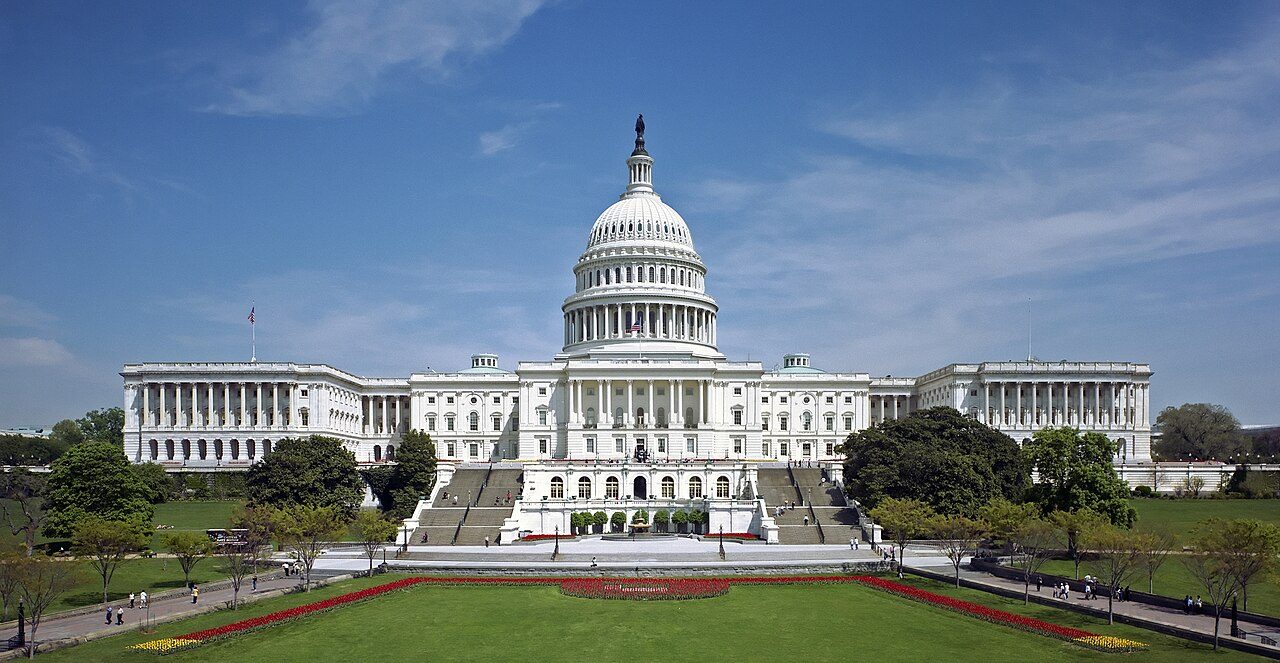
Tomorrow, Americans choose a new Congress. The polls point to a Democratic House and a knife-edge Senate. Here is what is at stake, where the battle will be won or lost, and why it matters to all of us in the Caribbean family, wherever we live.
Why this matters to us
It is tempting to see America's midterm elections as someone else's business. But for the Caribbean, few foreign elections matter more.
The United States is home to the largest Caribbean diaspora anywhere in the world: families from Jamaica, Haiti, Trinidad and Tobago, Guyana, Barbados and beyond, whose remittances keep homes running across the region. Washington's decisions on tariffs, deportations, aid to Haiti, and policy towards Cuba and Venezuela shape our economies and our security. Many of you reading this have a cousin in Brooklyn, a sister in Miami or a grandchild in Atlanta, and some of you will be voting tomorrow.
As someone trained in diplomacy, I have learned that what happens in Congress often matters as much as what happens in the White House. Congress controls the purse strings, holds hearings and can check a President's power. Tomorrow, American voters decide who holds that power for the next two years.
What the forecasts say
Every major forecaster expects the Democrats to win the House of Representatives. The Senate is far closer, though it too leans Democratic.
- Decision Desk HQ gives Democrats an 84% chance of winning the House, with around 241 seats, and a 64% chance of winning the Senate.
- Nate Silver's model puts Democrats' chances of retaking the House at about 95%, with a net gain of around 25 seats, and describes the Senate as far more competitive.
- Prediction markets such as Kalshi give Democrats about a 93% chance of winning the House and 71% for the Senate.
The Senate is where the real drama lies. Republicans currently hold 53 seats to the Democrats' 47 (including two independents who vote with them), so Democrats need to gain at least four seats while holding on to their own.
The Senate races to watch
| State | The contest | Where it stands |
|---|---|---|
| Ohio (special election) | Jon Husted (R) vs Sherrod Brown (D) | Brown leads by about 2.6 points in the polling average |
| Maine | Susan Collins (R) vs Troy Jackson (D) | Jackson narrowly ahead, but Collins has beaten the polls before |
| Iowa (open seat) | Ashley Hinson (R) vs Josh Turek (D) | Effectively tied |
| Kansas | Roger Marshall (R) vs Adam Hamilton (D) | Hamilton slightly ahead, in a state that has not elected a Democratic senator since 1932 |
| Texas (open seat) | Ken Paxton (R) vs James Talarico (D) | Markets favour Talarico |
| Nebraska | Pete Ricketts (R) vs Dan Osborn (Independent) | Tied in one recent poll; others lean Republican |
| Alaska | Dan Sullivan (R) vs Mary Peltola (D) | Leaning Democratic in some models |
| North Carolina (open seat) | Roy Cooper (D) leads | Leaning Democratic |
| Michigan (Democratic-held, open) | Mike Rogers (R) vs Abdul El-Sayed (D) | Republicans' best chance of a gain, but El-Sayed is favoured |
Several of these races are within the margin of error, so a small swing in turnout on the day could tip a whole cluster of them one way or the other.
The issues deciding the vote
The cost of living. Just as in the Caribbean, prices are the number one worry. In an AP-NORC poll, 84% of American voters named the cost of living as one of their most important issues, and polls show around 70% disapprove of the President's handling of inflation. Tariffs are part of this story: in an NBC News poll, 55% of voters said tariffs have hurt the economy, against 33% who said they have helped. Caribbean exporters and shoppers will know the feeling.
Democracy. Among likely voters, a PBS News, NPR and Marist poll found preserving democracy almost level with the cost of living as the top concern, at 33% against 34%. Democrats rank it highest, which suggests they are especially motivated to vote.
A verdict on the President. Midterm elections are usually a referendum on the person in the White House. President Trump's net approval rating stands at around minus 22 points, and the New York Times notes it is the second lowest of any President heading into midterms since 1946. In one poll, 44% of voters said their vote for Congress is mainly a vote against him, while 21% said it is a vote for him.
Immigration and crime. These remain the Republicans' strongest ground. Voters still trust them more on border security, crime and immigration, though polls show that lead narrowing. For our diaspora, immigration policy is far from abstract: it decides who can stay, who can visit, and who may be sent home.
A word of caution
Forecasts are not results. American polls underestimated Republican support in 2016, 2020 and 2024. Republicans have also redrawn electoral maps in several states to strengthen their position in the House. And because so many Senate races are within a point or two, even a modest polling error could hand Republicans the Senate while Democrats take the House. Prediction markets currently put the chance of that split result at around one in four.
In other words: the favourite is clear, but nothing is settled until the votes are counted.
What it could mean for the next two years
If Democrats win both chambers, the most likely outcome according to the forecasts, President Trump would face divided government for the rest of his term. Expect congressional investigations into his administration, tougher battles over his legislation and nominees, including judges, and likely stand-offs over spending and tariffs. The White House would probably lean more heavily on executive orders.
If Democrats win only the House, Republicans would keep control of Senate confirmations, but Democrats could block legislation and launch investigations.
If Republicans hold both, the President's agenda would continue with fewer checks, and the result would be read as an endorsement of his approach on tariffs and immigration.
What it means for the Caribbean. Foreign policy remains with the President whatever happens tomorrow. But Congress can still make a real difference to our region by:
- holding hearings on deportations, including the removal of third-country nationals to Caribbean states;
- shaping trade policy and pressure over tariffs on Caribbean goods;
- deciding funding for Haiti, security cooperation and development programmes;
- influencing the direction of US policy on Cuba and Venezuela, which so recently divided CARICOM at the United Nations.
Whoever wins, Caribbean governments will need the same pragmatic diplomacy we have argued for on these pages: building relationships with both parties, in both chambers, so that the region's voice is heard.

A word to our readers in America
To our Caribbean family in the United States who are eligible to vote: your voice counts, and in races this close, a few thousand votes can decide a Senate seat. Whatever your politics, make a plan and make it count.
Kingston Mouth will be following the results closely and will bring you our analysis of what the outcome means for the Caribbean and its diaspora later this week. Tell us what you are watching for in the comments or on our Facebook page.
Donovan Reynolds is the founder of Kingstonmouth.com and a trained diplomat.
Sources
- Decision Desk HQ: 2026 midterm election forecast
- Silver Bulletin: 2026 midterm election forecast
- Kalshi: 2026 midterm predictions
- Election Central: 2026 Senate polls and battleground races
- AP-NORC: voters cite the economy and cost of living as top issues
- PBS News: final poll before Election Day
- Forbes: Trump approval a week before Election Day
- Yahoo News: what the latest polls say
Get Kingston Mouth in your inbox
Donovan Reynolds' latest articles and videos on Jamaica, the UK and the world, plus occasional sponsored offers. Unsubscribe any time.
Enjoyed this? Kingstonmouth.com is independent and reader-supported.
☕ Buy us a coffee
Comments
Loading comments…
Leave a comment