
Jamaica’s AI Deal Needs Daylight: Who Pays for the Power, Who Pays for the Water?
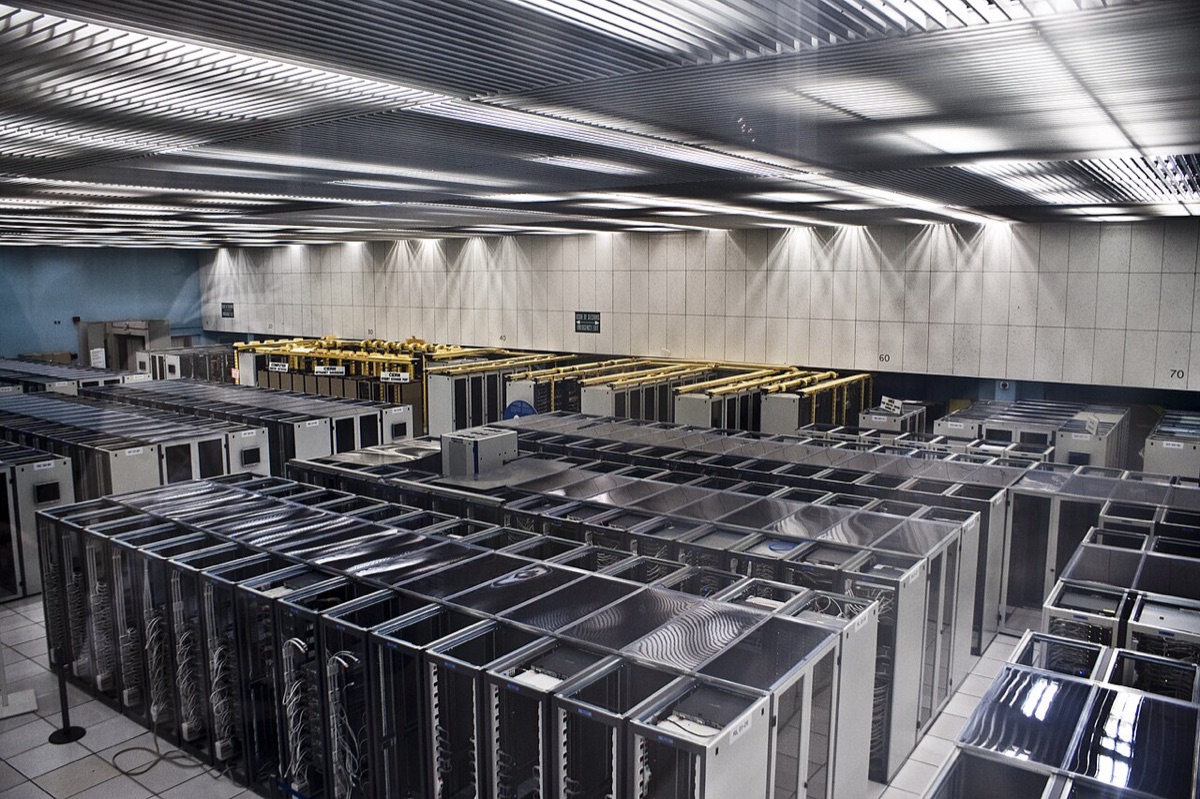
The Government says its artificial intelligence MOU will not touch the national grid or the water supply. Kingston Mouth asks it to put those promises in writing, and before the people’s Parliament.
By Donovan Reynolds, a political commentator and trained diplomat
On Sunday, 15 November, Prime Minister Andrew Holness told the JLP’s conference in Montego Bay that Cabinet had approved a memorandum of understanding with a group of investors to explore building artificial intelligence infrastructure in Jamaica. It was a bold announcement. Yet five days later, Jamaicans still do not know who the investors are, what the MOU says, where any facility would be built, or how it would be powered and cooled.
Kingston Mouth does not oppose Jamaica taking its place in the AI economy. We do insist that a decision of this weight be made in daylight. AI data centres are among the most power-hungry and water-hungry buildings on earth, and Jamaica has just come through a hurricane, an island-wide blackout and one of its worst droughts. The country deserves to know exactly what is being explored in its name.
What We Have Been Told So Far
The Prime Minister framed the MOU as a matter of national ambition. He said it would let Jamaica take part in creating the technology, not merely consume it. However, he did not say whether the MOU covers AI data centres, and he did not name the investors.
The Opposition responded within a day. Christopher Brown, the PNP’s spokesman on science and technology, said the Government had put the cart before the horse. He called for the MOU to be tabled in Parliament, for the investors to be named, for an explanation of the effect on water and electricity, and for a full, independent and public environmental and resource impact assessment. In his words, Jamaica’s water, power and land are “not bargaining chips”.
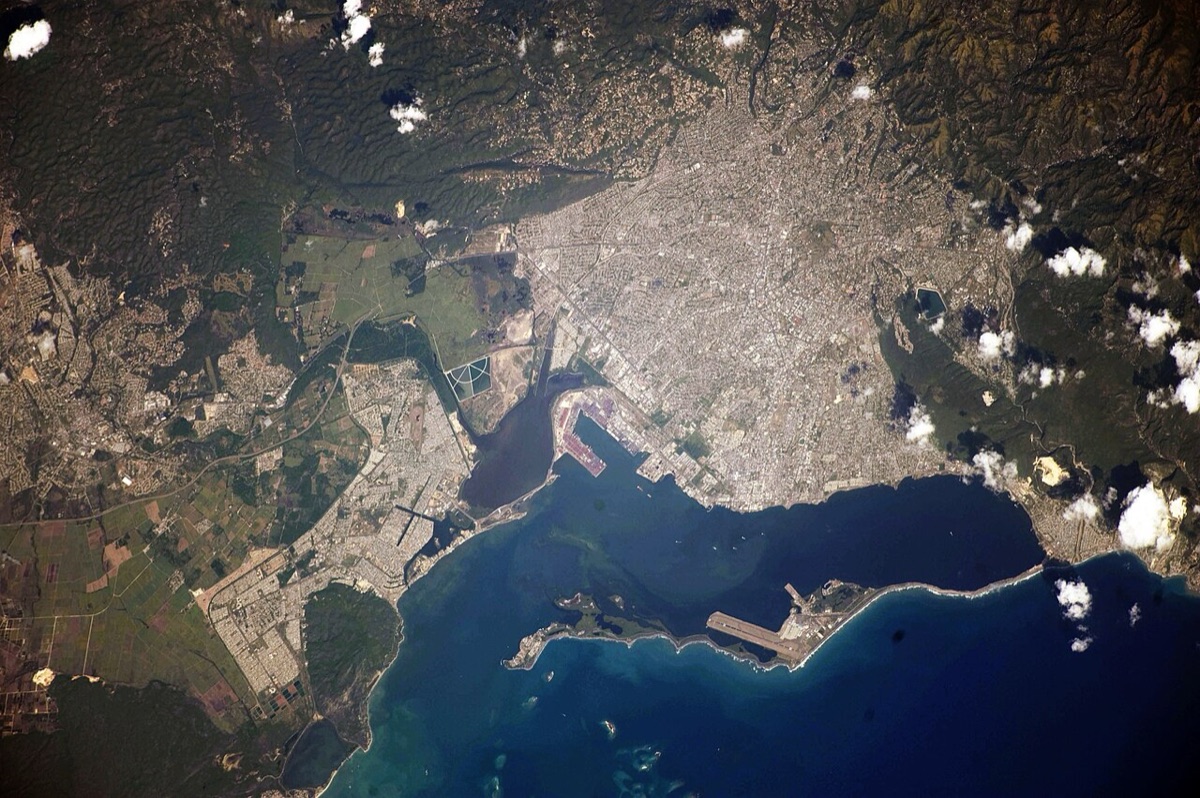
Building on the debate, St Catherine East Central MP Alando Terrelonge has already urged that AI data centres be built in Portmore, as a source of jobs for young people.
On 19 November, Information Minister Dr Dana Morris Dixon sought to calm public concern. She stressed that the MOU is only exploratory, that no agreement is being signed and that “there is no investor coming”. Most importantly, she said Cabinet has set two conditions: any infrastructure cannot pull from the national grid, and it can have no impact on Jamaica’s water systems.
Electricity: Will They Bring Their Own Power?
If the Government means what it says, any AI facility will have to generate its own electricity. That is the right condition, but it raises more questions than it answers.
Jamaica’s grid is small. According to JPS’s latest annual report, the country has 1,040.8 MW of installed capacity and a record peak demand of 697 MW, set in August 2025. Demand reached 676.9 MW on 1 July this year as the heat rose. On 5 June, the entire island lost power in an all-island blackout. A single large AI campus can draw hundreds of megawatts, as much as a large share of everything Jamaica uses at its busiest hour.
So Kingston Mouth asks:
- Will the investors build their own power plant, and will it be off-grid entirely or connected as a backup?
- What fuel will it burn? A new fossil-fuelled plant would set back Jamaica’s renewable energy targets. Solar, wind or storage on that scale needs land.
- If the facility ever needs grid power, during a hurricane for example, who pays for the extra capacity, and will Jamaican households and businesses see it in their bills?
- Will any surplus clean power be shared with nearby communities?
Water: A Thirsty Industry in a Dry Season
Water is the sharper concern. Data centres use large volumes of water to cool their servers. The International Energy Agency estimates that data centres worldwide consume about 560 billion litres a year, and that this could more than double by 2030. One industry analysis found that a single 100 MW facility using evaporative cooling can consume 2.5 billion litres a year, enough to supply more than 80,000 people.
Now set that against Jamaica’s year. In August the NWC imposed water prohibition orders across seven parishes. By October, 107 of its 405 systems were in drought, and daily production had fallen from about 199 million to 188 million gallons, leaving an islandwide shortfall of 10 to 15 million gallons a day. Water Minister Matthew Samuda warned it could become the worst drought ever in eastern Jamaica. Even after recent rains, the NWC said on 5 November that it could not yet lift restrictions. Meanwhile, regional forecasters warn that a very strong El Niño could make things worse.
The Government says any AI facility can have no impact on water systems. Kingston Mouth asks how that will be achieved and enforced:
- Will the investors use closed-loop or dry cooling that needs little or no fresh water? Dry cooling saves water but uses more power, so the two promises are linked.
- If they need water, will they build their own desalination plant, and where will the brine be discharged?
- Will they be barred from drawing on NWC supplies, rivers or underground aquifers, including during droughts?
- Who will meter their water use, and will the figures be published?
The Environment: Guardrails for a Fragile Island
Yet beneath the questions of power and water lies a deeper one: what will protect Jamaica’s land, coastline and wildlife? Ours is a small island of watersheds, wetlands, mangroves and reefs, many still recovering from Hurricane Melissa. A large data centre, its own power station and perhaps a desalination plant would leave a real footprint. If it burns fossil fuel, it adds emissions. If it discharges warm water or brine, it can harm reefs and fisheries. If it is built on wetlands or forest, that land is lost.
Jamaica does have laws for this. The Natural Resources Conservation Authority Act of 1991 set up the authority that manages and protects the island’s natural resources, and NEPA issues environmental permits for prescribed developments. Under the Act, the NRCA may require an environmental impact assessment. However, that word “may” matters. Jamaica has committed to complete and promulgate EIA regulations under the Open Government Partnership, and the Jamaica Environment Trust has long complained that EIAs are done at the discretion of the NRCA. In other words, the strongest safeguard is still optional.
This brings us to the guardrails Kingston Mouth believes must be in place before any AI infrastructure is approved:
- A mandatory, independent and public environmental impact assessment, with public hearings in the communities affected.
- No siting on wetlands, mangroves, forest reserves, protected areas or critical watersheds.
- Power from renewable sources, with a binding limit on carbon emissions.
- Low-water or waterless cooling, and strict controls on any discharge of heated water or brine into the sea.
- Published, independently audited figures on energy and water use, every year.
- A decommissioning bond, so that Jamaica is not left with an abandoned site if the investors leave.
What’s in It for the Communities Next Door?
Beyond the environment, there are the people who would live beside any facility, whether in Portmore or anywhere else. They would bear the construction traffic, the noise, the land use and any risk to their water. So what would they gain?
The honest answer from abroad is: less than people expect, unless it is written down. Data centres are huge investments but small employers. One analysis found that a typical data centre creates around 1,700 construction jobs but only about 150 permanent positions. Economists surveyed by UNESCO warned that data centres may bring far fewer jobs than many communities expect. For that reason, communities in the United States increasingly insist on legally binding community benefit agreements before construction begins, covering local hiring, training, tax revenue, and water and energy use.
Jamaica should do the same. Kingston Mouth believes any AI facility must come with a binding community benefit agreement, tabled in Parliament alongside the MOU, that guarantees:
- Local jobs first: a fixed share of construction and permanent jobs for residents of the surrounding communities, at decent wages.
- Training and skills: funded apprenticeships and scholarships through HEART/NSTA Trust, UTech and UWI, so young Jamaicans can move into the technical roles, not just the security and cleaning jobs.
- A community fund: an annual payment into a fund run by a board with majority community representation, for schools, clinics, roads and youth clubs.
- Shared infrastructure: any surplus clean power, water or high-speed broadband built for the facility shared with nearby homes, schools and businesses.
- Local suppliers: a commitment to buy goods and services from Jamaican businesses wherever possible.
- Protection from harm: limits on noise and traffic, compensation if wells, farms or fisheries are affected, and regular public meetings with residents.
Without these, the risk is a familiar one in our history: outside investors take the value, and the community is left with the cost.
The Case for the Deal, and What We Need to Know
Fairness requires us to set out the Government’s case. The Prime Minister argues that Jamaica was left behind in earlier technological revolutions and cannot be left behind again, and that AI can create jobs for the next generation. Ministers stress that this is only an exploratory MOU, that no investor has committed, and that Cabinet has already ruled out any draw on the grid or the water supply. Those conditions are welcome. Some experts also argue that the environmental cost of AI depends on where and how data centres are built, how efficiently they run and how their power is supplied. A well-designed facility, powered by clean energy, need not be a disaster.
Likewise, there is a regional argument. The Caribbean Telecommunications Union and UWI produced a Caribbean AI Task Force report this year, and one commentator has asked why Jamaica is going it alone rather than pooling bargaining power with its CARICOM partners. A regional approach could win better terms on training, research access and technology transfer.
However, good intentions are not safeguards. A condition announced at a press briefing is not the same as a clause in a signed agreement. Kingston Mouth therefore calls on the Government to bring all of this before Parliament: the MOU itself, the answers to the questions below, and the environmental, energy and water safeguards it intends to apply. These should be tabled in full, openly debated, and put to a vote before any binding agreement is signed. The questions Parliament must have answered are:
- Who are the investors, and where are they based?
- Will the MOU be published and tabled in Parliament?
- Will any facility have its own independent power supply, and from what fuel?
- Will it have its own water supply, and what cooling technology will it use?
- Where would it be built, and has any land been identified?
- Will a full, public environmental impact assessment be mandatory?
- Who owns the data processed in Jamaica, and under whose laws?
- How many permanent jobs will go to Jamaicans, at what skill level, and will there be a binding community benefit agreement for the surrounding communities?
- Who pays if public infrastructure must be upgraded?
- Will Jamaica seek a regional partnership through CARICOM?
Jamaica’s water, power and land belong to the Jamaican people. A deal of this scale should not be settled at a party conference or in a Cabinet room. It should be laid before the people’s representatives, debated in the open and decided by a vote, so that every Jamaican can see who stood for what. Before the country goes any further, the people deserve to see the deal, and Parliament deserves to decide it.
Donovan Reynolds
Political Commentator, Trained Diplomat and Environmental Activist
Donovan Reynolds is the author of River Tales and Environmental Realities, available on Amazon and Kindle, and as an ebook on Etsy and Kingstonmouth.com.
Sources
- Gov’t approves MOU for creation of AI infrastructure in Jamaica, says Holness – Jamaica Observer (15 Nov 2026)
- JLP Conference: Jamaica to explore establishment of AI infrastructure – The Gleaner (15 Nov 2026)
- Opposition calls for disclosure of AI infrastructure MOU – The Gleaner (16 Nov 2026)
- ‘100 Questions’ – The Gleaner (17 Nov 2026)
- Study estimates magnitude of data centre pollution – The Gleaner (17 Nov 2026)
- Terrelonge bats for AI data centres to be built in Portmore – Jamaica Observer (18 Nov 2026)
- AI plans under scrutiny: Morris Dixon seeks to assure no deal has been reached – The Gleaner (19 Nov 2026)
- Gov’t assures AI infrastructure will not put pressure on electrical and water systems – Irie FM
- Jamaica’s AI Ambition: Where Is the Caribbean Partnership? – Leo Gilling
- JPS Annual Report 2025
- Heat sends power demand to 2026 high – Jamaica Observer (8 Jul 2026)
- JPS preliminary report on the 5 June all-island blackout – The Gleaner
- Samuda warns of tougher water restrictions – The Gleaner (30 Sep 2026)
- Water woes worsen – Jamaica Observer (1 Oct 2026)
- Tighter water restrictions to come, says Samuda – Jamaica Observer (1 Oct 2026)
- Improved water levels not enough to lift drought restrictions – The Gleaner (5 Nov 2026)
- Caribbean warned of possible intensification of drought – Jamaica Observer (2 Nov 2026)
- Data Centre Futures: Water – Arup
- How water resilience will shape the future of data centers – Baringa
- Natural Resources Conservation Authority Act 1991 – UNEP LEAP
- Environmental Impact Assessments – NEPA
- Complete Environmental Impact Assessment Regulations (JM0005) – Open Government Partnership
- JET calls for NEPA reform – Jamaica Observer
- AI boom could raise power costs without jobs bonanza – Jamaica Homes News (22 Sep 2026)
- Agreements strengthen data center projects – Eastern Atlantic States Carpenters
- Empowering communities through community benefit agreements in AI-fuelled data center development – Federation of American Scientists
- Why community benefit agreements are necessary for data centers – Brookings (29 Jan 2026)
Get Kingston Mouth in your inbox
Donovan Reynolds' latest articles and videos on Jamaica, the UK and the world, plus occasional sponsored offers. Unsubscribe any time.
Enjoyed this? Kingstonmouth.com is independent and reader-supported.
☕ Buy us a coffee
Comments
Loading comments…
Leave a comment