
Nvidia, Huang and the White House: when the boardroom answers to the President

A spy scandal, a resignation, a trillion dollars lost and a presidential phone call: what the Jensen Huang affair says about corporate governance in Trump's America
By Donovan Reynolds
On Monday 23 November, eleven days after he resigned in disgrace, Jensen Huang was back in charge of Nvidia, the world's most important maker of artificial intelligence chips. The company's board, which only a week earlier had said it had no intention of bringing him back, voted unanimously to reinstate him as president, chief executive and director.
What changed in those seven days was not the evidence. It was the intervention of the President of the United States. Donald Trump told CNBC that he had spoken to the board and "convinced them" (CBS News). For anyone who cares about how companies are run, and about where the line between the state and the boardroom should lie, this is a story that matters far beyond Silicon Valley.
Why Huang went
The crisis began when The New York Times reported on Huang's relationship with Alice Huang, an executive at Megaspeed, a Singapore-based data centre company that was a major customer for Nvidia's chips (NPR via GPB). US intelligence officials have reportedly linked her to Chinese intelligence; Megaspeed says she left the company in 2025 and that it conducts lawful business. Soon afterwards, reports emerged of a second affair, this time with a senior executive who reported directly to Huang (Fox).
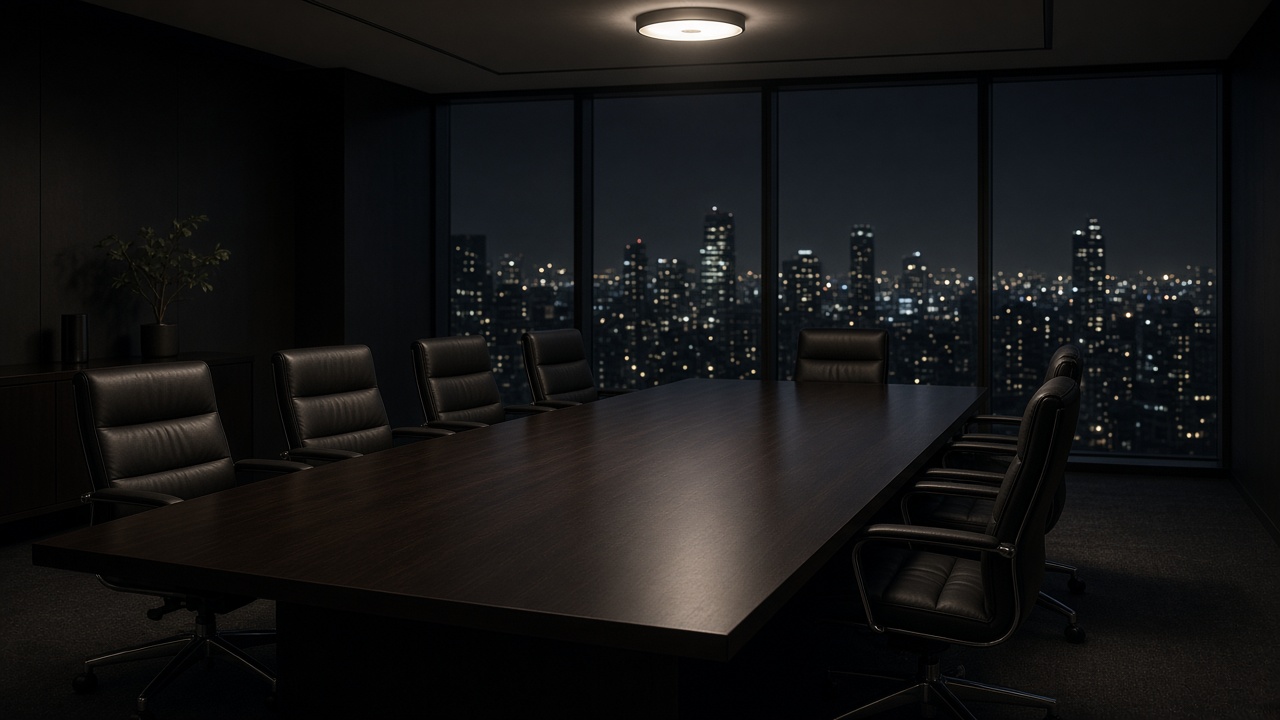
The board met that night. On 12 November Nvidia announced that Huang had resigned with immediate effect, that chief financial officer Colette Kress would serve as interim chief executive, and that the board would search for a permanent successor (Nvidia SEC filing). Huang himself admitted serious mistakes in his personal life and promised to cooperate with an independent investigation.
The matter was not only personal. Huang had become one of Washington's most influential business voices, lobbying for looser controls on chip exports to China, and lawmakers in both parties were already asking questions about alleged chip smuggling and export-control compliance. On 17 November, on the company's earnings call, board chair Harvey Jones said Huang had shown personal behaviour inconsistent with Nvidia's code of conduct, and that the board did not intend to reinstate him (NPR via KUOW).
The U-turn
Against this backdrop, the reversal was astonishing in its speed. Trump had said publicly on 16 November that he "would not mind" Huang returning, while a petition backed by Elon Musk and other tech figures gathered well over 150,000 signatures. Then, on 23 November, the board announced its unanimous decision. Its statement said it had received input from senior levels of the US government, and on that basis was confident that Huang's return posed no national security risk (Nvidia SEC filing).
The President made no secret of his part. He told CNBC he had been speaking to the board "directly and indirectly", and reportedly dialled into the board meeting itself to argue for Huang's return (The Hill). Vice President JD Vance was reported to have spoken with Huang and the board, offering assurances that Huang was not a security risk and was not facing charges over alleged chip smuggling to China (Yahoo Finance). Asked whether Nvidia's falling share price had influenced him, Trump replied "probably so", adding that the long term mattered more (Fortune).
Capitol Hill: a bipartisan backlash
Building on this, the reaction in Washington was swift and, unusually, came from both sides of the aisle. Top Democrats say they will open their own investigations into the reinstatement when they take power in Congress in January (Axios). Senate Democratic leader Chuck Schumer promised that his party would use its full power to investigate any wrongdoing by the administration, Huang and other Nvidia executives. In the House, Democratic leader Hakeem Jeffries widened the target to the Commerce Secretary, Howard Lutnick, and his department. Senator Elizabeth Warren called the decision "reckless" (MS NOW).
Yet beneath the surface, the more telling response came from Republicans. Senator Pete Ricketts said the board's decision did not excuse Huang from testifying, nor absolve Nvidia of answering for national security concerns and unaccounted-for chips. Other Republican lawmakers openly criticised the White House's involvement. Huang is still due to give a closed-door interview to House intelligence and foreign affairs committees on 1 December, followed by public testimony before the Senate Banking Committee (The Washington Sun). Democrats have also signalled new legislation, with Huang's ties to China and chip export controls high on the agenda.
In short, the reinstatement may have ended the boardroom crisis, but it has opened a political one. Nvidia, its board and the administration could face hearings and a long public inquiry in the new year.
A test of corporate governance
This brings us to the heart of the matter: who runs a company, and on whose behalf? Good corporate governance rests on a few simple principles. The board is independent. It acts in the interests of the company and its shareholders. It applies its own code of conduct consistently, to the founder as much as to the junior employee. And it reaches decisions through a proper process, not under outside pressure.
Measured against those principles, the Nvidia board's conduct raises hard questions.
- Independence. A week after saying it would not reinstate Huang, the board reversed itself following direct contact from the President and Vice President. Even if the directors genuinely changed their minds, the appearance is of a board that bent to political power.
- Consistency. The board itself said Huang's behaviour was inconsistent with the company's code of conduct, including a relationship with a senior executive who reported to him. Reinstating him within days tells every Nvidia employee that the rules apply differently at the top.
- Process. The independent investigation the board announced has not, as far as has been made public, concluded. The national security questions remain before Congress. Deciding before either has run its course looks premature.
- Conflicts of interest. Democrats have alleged links between the administration's interest in Nvidia's share price, Nvidia's donations and the President's push for Huang's return. These are allegations, not established facts, but a well-governed company should never leave room for them.
To be fair to the board, it has created a new committee to oversee national security policy, export-control compliance and trade risk (NPR via GPB), and it says it was satisfied with Huang's candour after a series of meetings. Even before the U-turn, the investor Brad Gerstner warned against political pressure from either the left or the right forcing a board to act before the facts were known. That warning cuts both ways, and it is the right test to apply.
The market speaks
Likewise, the markets have delivered their own verdict on Huang's importance. Nvidia closed at US$186.64 on 6 November, before the board began its review; by 16 November it had fallen 16.3 per cent to US$156.14 (Webull). Over the month the company lost roughly a trillion dollars in market value (Finviz). When the reinstatement was announced, the stock rose more than 30 per cent (Yahoo Finance).
Those swings show how much of Nvidia's value investors attach to one man, which is itself a governance warning about key-person risk. But there is a deeper question for the market. If the leadership of a trillion-dollar company can be decided by a phone call from the White House, investors must now price in political risk alongside commercial risk. A President who measures his success by the stock market may be tempted to intervene again, and the next intervention may not be one that shareholders welcome.
Was it right for the President to intervene?
There is a serious case for the President's action, and it deserves to be heard. Nvidia is not an ordinary company. Its chips are the backbone of the global AI industry and a strategic asset in America's technology race with China. The board itself asked for assurance on the national security question, and only the government could give it. Trump argues that the country must "protect our geniuses" (The Hill), that Huang has paid for his personal failings, and that a trillion dollars of shareholder value, much of it held in ordinary Americans' pension funds, was at stake.
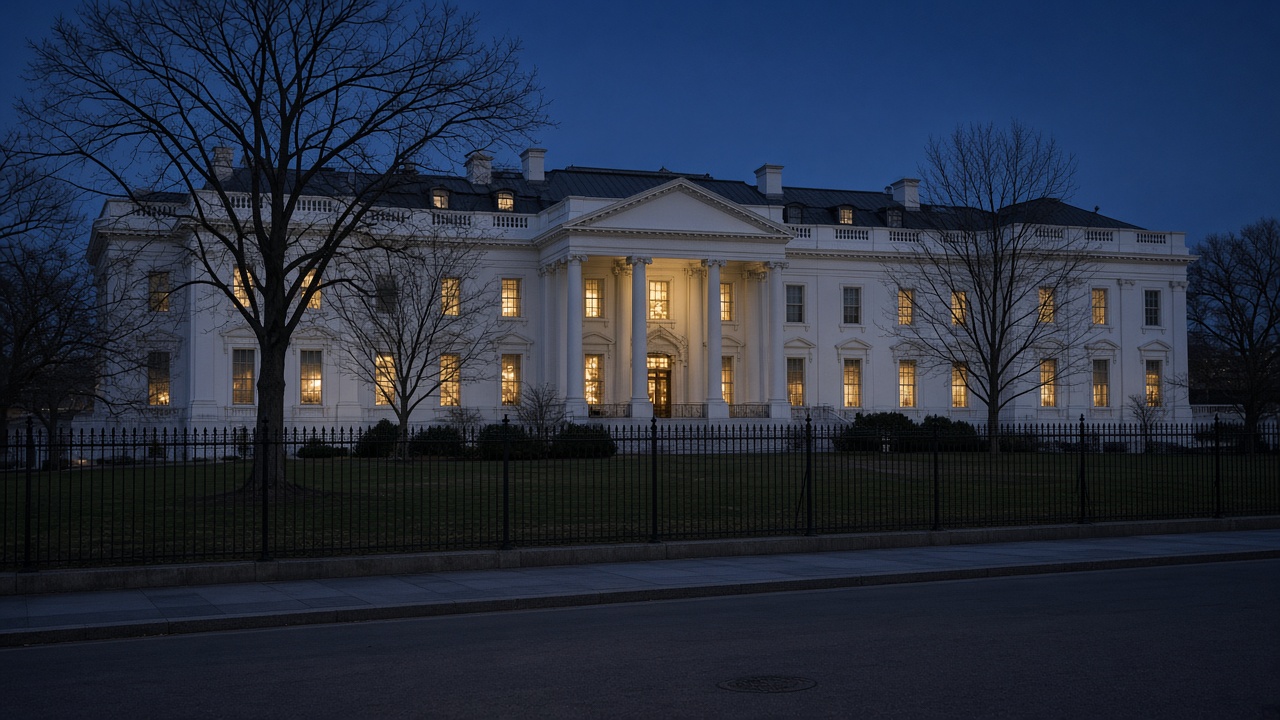
However, the case against is stronger on the principles of good governance. A head of state leaning on a private company's board, and reportedly joining its meeting, blurs the line between public power and private enterprise. It sets a precedent that politically connected executives can be protected from the consequences of their conduct. It clears a man of national security concerns before Congress has heard his evidence. And it does so in a way that invites suspicion of conflicts of interest, however unproven. The fact that Republicans, not only Democrats, have objected suggests these concerns are not merely partisan.
As someone trained in corporate governance and diplomacy, I would put it this way. Governments have every right to set the rules: export controls, security clearances, and the law. Boards have the duty to decide who leads the company within those rules. When a President chooses the chief executive, the rule-maker has also become the referee, and that is never healthy, whichever party holds the White House.
Lessons beyond Silicon Valley
The Huang affair is a warning that reaches well beyond America. In the Caribbean and across the developing world, we know what happens when the line between political power and business blurs: favouritism, weak institutions and a loss of public trust. We have long been lectured by Washington on good governance. This week, the lesson ran the other way.
Over the coming weeks, Huang will face questions in closed session and in public before Congress. The answers matter, not only about his relationship with a suspected Chinese agent, but about how a board and a White House came to reach the same conclusion in a matter of days. Good governance is not about whether the outcome pleases the market. It is about whether the process can withstand scrutiny. On that test, the jury is still out.
Donovan Reynolds is a political commentator and trained diplomat, with a background in human rights law and corporate governance.
Sources
- NVIDIA Announces CEO Transition, Nvidia, SEC filing, 12 November 2026
- NVIDIA Board Reinstates Jensen Huang as President, CEO and Board Director, Nvidia, SEC filing, 23 November 2026
- Nvidia CEO Jensen Huang resigns, effective immediately, Fox
- Nvidia board says it does not intend to reinstate Jensen Huang as CEO, NPR via KUOW
- Nvidia board says it does not intend to reinstate Jensen Huang as CEO, NPR via GPB
- Trump says he spoke to Nvidia board and "convinced them" to reinstate Jensen Huang, CBS News
- GOP lawmakers decry White House involvement in Jensen Huang reinstatement, The Hill
- Trump says he 'convinced' Nvidia board to reinstate Jensen Huang, The Hill
- Nvidia live updates: Jensen Huang reinstated as CEO; Trump says he 'convinced' board, Yahoo Finance
- 'Totally involved': Trump says 'I convinced' Nvidia's board to reinstate Jensen Huang, Fortune
- Jensen Huang's return to Nvidia sparks bipartisan backlash on Capitol Hill, Axios
- 'You gotta be kidding me': Members of Congress react to Huang's Nvidia return, MS NOW
- 'This Is What a Rigged System Looks Like': Democrats Fume Over Huang's Reinstatement, The Washington Sun
- Jensen Huang's five-sentence statement added about $90 billion to Nvidia's market value, Webull
- Nvidia Shares Rise 2.3% Premarket Following Decline After Jensen Huang's Departure, Finviz
Related reading
- Jamaica’s AI Deal Needs Daylight: Who Pays for the Power, Who Pays for the Water?
- The Blue Wave of 2026: What the US Midterm Election Results Mean for Trump
- A Solitary Seat at the Table: Britain, COP31 and the Caribbean
- Weh Di Money Deh? Beenie Man, Hurricane Melissa and Jamaica's Accountability Problem
Get Kingston Mouth in your inbox
Donovan Reynolds' latest articles and videos on Jamaica, the UK and the world, plus occasional sponsored offers. Unsubscribe any time.
Enjoyed this? Kingstonmouth.com is independent and reader-supported.
☕ Buy us a coffee
Comments
Loading comments…
Leave a comment